

 中文简体
中文简体Tempered glass belongs to safety-processed architectural glass modified through specialized thermal tempering treatment, whose comprehensive mechanical strength is 3 to 5 times higher than common annealed flat glass, and in the fragmented state after breakage avoids sharp jagged fragments that easily cause human cuts, making it the mainstream safety glass material widely used in construction, home furnishing, industrial manufacturing, and electronic accessory fields globally. Its core advantages concentrate on outstanding impact resistance and reliable safety performance, while inherent technical limitations like spontaneous breakage restrict its usage in some precision enclosed component scenarios, and standardized installation plus regular maintenance can effectively lower abnormal damage probability in long-term service.
Basic Manufacturing Principle of Tempered Glass
Thermal Tempering Core Processing Flow
The whole fabrication of tempered glass centers on high-temperature heating and rapid air quenching two key steps, raw material selects qualified ordinary float glass blank after edge polishing and defect inspection first, eliminating micro-cracks and burrs on glass edge which are easy to induce later cracking. Processors send qualified glass into continuous tempering furnace for uniform heating, heating temperature is controlled within fixed high-temperature range to make glass reach softening state without deformation, after homogeneous heating, high-pressure cold air is instantly blown onto both upper and lower surfaces of glass sheet to realize fast surface cooling.
Surface glass layer solidifies and shrinks rapidly under sudden cooling condition, while inner glass part keeps high-temperature flowing state temporarily, gradual cooling of inner material forms lasting compressive stress on glass surface and matched tensile stress inside glass substrate, this stable internal stress structure is the fundamental reason for the improvement of tempered glass’s overall mechanical performance. Different from chemical toughening glass relying on ion exchange for stress formation, mainstream thermal tempered products realize performance upgrading purely through physical temperature change, more suitable for large-size glass bulk production in industrial mass production lines.
Key Preprocessing Requirements Before Tempering
- Edge grinding and chamfer treatment: all cutting edges of original glass need fine grinding to remove tiny notch defects, unprocessed rough edges will form stress concentration points during high-temperature heating and lead to scrapping in tempering process.
- Surface defect screening: raw glass with surface bubbles, scratch damage and stone impurities will be eliminated in advance, these hidden flaws become breakage source after internal stress forms.
- Size precision calibration: dimension error of blank glass is controlled in allowed range to avoid uneven air blowing during quenching resulting in inconsistent stress distribution on finished glass.
Key Physical Performance Indicators of Tempered Glass
Multiple core physical indexes distinguish tempered glass from conventional glass products, the most prominent indicators focus on bending resistance, impact endurance and high-low temperature tolerance, related measured data can intuitively reflect its service superiority in complex application environments. The following comparison table sorts core performance gap between tempered glass and ordinary annealed glass:
| Performance Item | Tempered Glass | Common Annealed Glass |
|---|---|---|
| Relative Bending Strength | 3~5 times of standard plain glass | Basic reference benchmark value |
| Thermal Shock Resistance | Bear drastic temperature fluctuation over 200℃ | Crack easily under over 70℃ sudden temp change |
| Breakage Fragment Feature | Granular blunt small particles | Sharp large flake fragments |
Thermal Stability Performance Analysis
Benefit from uniform internal compressive stress structure, tempered glass owns far better thermal stability than regular glass, it can adapt to alternating temperature environment of cold winter and hot summer outdoors, in daily usage scenario like pouring boiling water into glass tabletop or cold drink on high-temperature glass panel, qualified tempered products rarely crack due to uneven thermal expansion and contraction. In actual construction exterior wall project, exterior tempered glass bears long-term sunshine irradiation and seasonal temperature shift, qualified finished products keep stable structure for decades without abnormal cracking caused by temperature difference.
Safety Fragmentation Characteristic
Once external force exceeds its bearing limit leading to rupture, tempered glass will split into countless irregular obtuse fine particles without sharp edges, these fragments lack cutting force to human body, this core safety trait is the primary reason for its mandatory adoption in places with frequent human activity. For instance, indoor shower partition glass and dining table glass panel, accidental collision breakage will not produce sharp glass shards stabbing people, greatly lowering casualty risk in home accident.
Main Application Scenarios of Tempered Glass in Multiple Industries
Building Construction and Interior Renovation Field
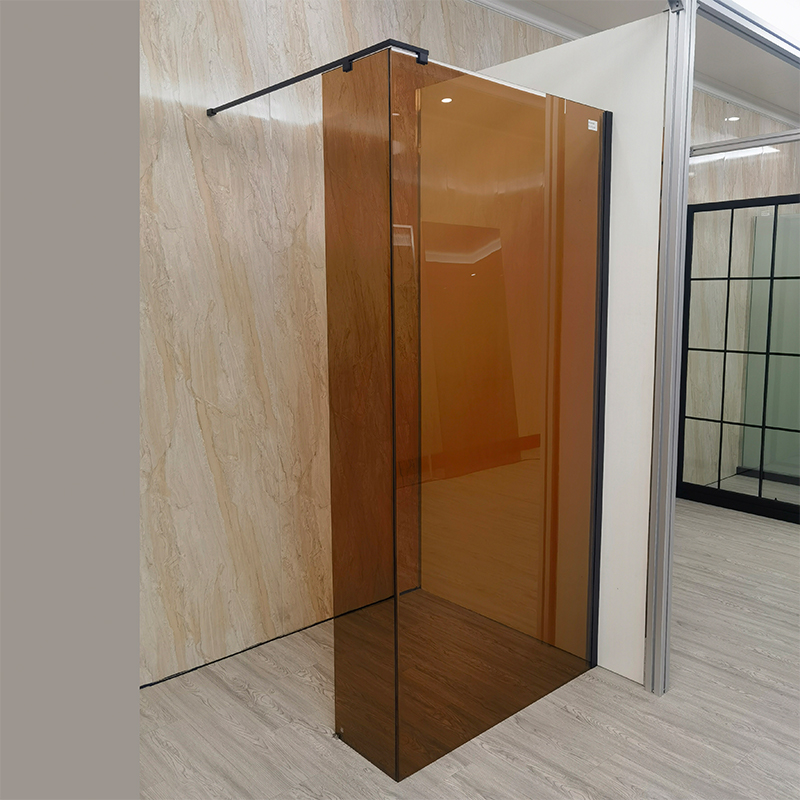
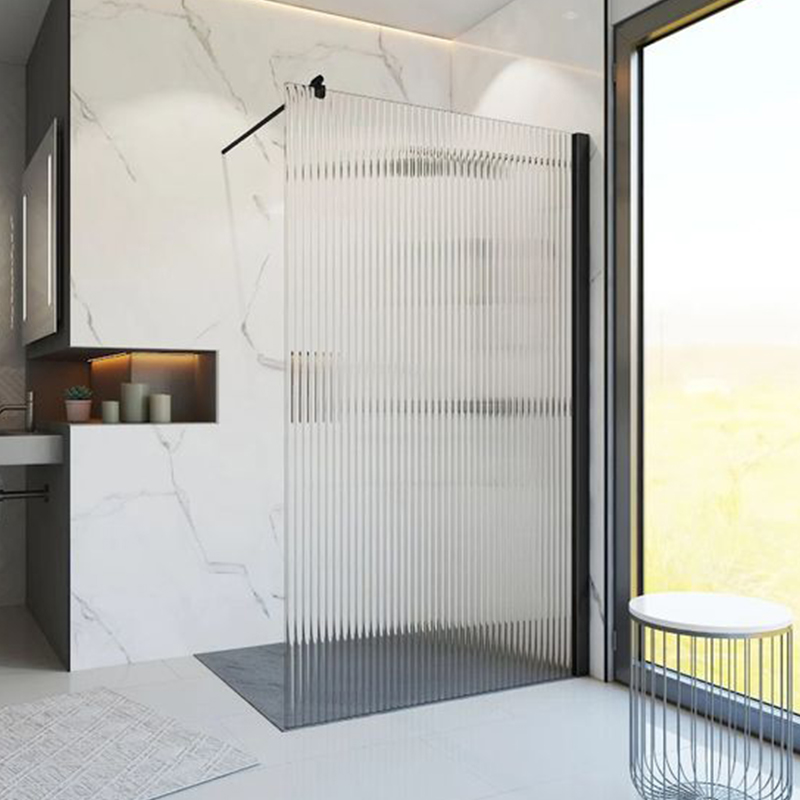
Construction industry consumes the largest share of global tempered glass output, covering building exterior window glass, balcony guardrail, indoor partition wall, bathroom shower enclosure and stair handrail transparent panel. Many regional building safety specifications explicitly require high-traffic public buildings such as shopping mall, kindergarten and hospital to adopt tempered glass for all easily collided glass components, aiming to reduce safety hidden danger from glass breakage. In modern home decoration, frameless glass door and fixed glass partition have become mainstream design choice, all matching glass panels adopt tempered processing to satisfy household daily safety demand.
- Residential housing: bedroom window, kitchen fixed glass, indoor bathroom fully enclosed shower screen all use standard tempered glass as basic material.
- Commercial public building: sightseeing elevator surrounding transparent glass, corridor safety guardrail, large floor-to-ceiling curtain wall all rely on thickened tempered glass to balance permeability and structural safety.
Household Furniture and Daily Supplies Industry
A large number of household furniture components select tempered glass as surface material, common products include solid wood matching glass dining table, tea table panel, cabinet transparent door, oven observation window and range hood baffle. Household electrical appliances with high working temperature prefer tempered glass thanks to its outstanding thermal stability, oven inner perspective glass needs enduring cyclic high temperature in long-term working, ordinary glass will crack under repeated heating and cooling while tempered material maintains complete structure stably.
Electronics and Automobile Supporting Area
Ultra-thin customized tempered glass is widely applied on consumer electronic product screen protection cover plate, surface after fine polishing and anti-fingerprint coating improves daily scratch resistance of electronic equipment screen. Automobile industry uses tempered glass for vehicle rear windshield and side window glass, matching laminated tempered front windshield forms full vehicle glass safety system, when traffic collision happens, side tempered glass crumbles into granular fragments to avoid sharp glass hurting passengers inside carriage.
Inherent Defect of Tempered Glass and Spontaneous Breakage Cause Analysis
Root Cause of Natural Spontaneous Breakage
Spontaneous breakage is the most unavoidable inherent shortcoming of thermally tempered glass, the primary inducing factor originates from tiny nickel sulfide crystalline impurity mixed in original glass raw material, such micro-particles inside glass will produce volume expansion with ambient temperature change, long-term accumulated expansion stress breaks the balanced internal stress structure of tempered glass and triggers automatic cracking without external impact. Besides raw material impurity, improper installation with rigid hard extrusion fixation also causes sustained extrusion stress on glass edge, gradually inducing late spontaneous cracking after long service time.
Industry practical statistical data shows that qualified standard tempered glass under standardized installation has low natural breakage probability, irregular tempering processing and rough construction installation are the top two artificial reasons for sharp rise of spontaneous cracking rate of finished glass.
Other Usage Limitations of Tempered Glass
- Cannot conduct secondary cutting and drilling: finished tempered glass owns closed stable internal stress, any cutting or hole punching damage will instantly destroy stress balance leading to full fragmentation of whole glass sheet, so all size shaping work must finish before tempering treatment.
- Surface stress unevenness risk: unqualified tempering equipment leads to inconsistent cooling air volume on glass surface, partial area stress is too concentrated and vulnerable to abnormal breakage under slight external force.
Daily Installation Specification and Maintenance Tips for Tempered Glass
Standard Installation Operation Specifications
Correct installation is the key to reduce later spontaneous breakage of tempered glass, reserved expansion gap must be kept between glass edge and fixed metal or stone frame during mounting, elastic rubber sealing strip is used for buffering connection instead of rigid direct clamping, reserved gap leaves space for glass thermal expansion and cold contraction in different seasons to avoid extrusion stress accumulation. Large-size curtain wall tempered glass also needs to calculate reserved clearance according to local annual maximum and minimum temperature difference to adapt seasonal dimensional variation of glass material.
Daily Cleaning and Long-term Maintenance Methods
Daily cleaning can adopt neutral glass cleaner and soft microfiber cloth to wipe surface dirt, avoid strong corrosive acidic or alkaline detergent eroding glass surface coating and edge sealing layer; hard sharp cleaning tool like steel wool is forbidden to scratch glass panel to prevent artificial surface scratch evolving into hidden crack source. Regular inspection work is needed for long-term installed building tempered glass, focusing on checking aging and falling off of edge rubber sealing strip, timely replacing invalid buffer accessories to prevent frame rigid extrusion after strip failure.
Development Trend of New-type Modified Tempered Glass Products
With continuous progress of glass deep processing technology, various modified upgraded tempered glass products emerge to make up for original material’s inherent drawbacks, among which heat-soaked tempered glass becomes mainstream optimized product aiming at solving spontaneous breakage trouble, raw tempered semi-finished product goes through constant temperature heat soaking treatment before leaving factory to accelerate volume expansion of internal nickel sulfide impurities, eliminate most glass with latent spontaneous breakage risk in advance at production stage and greatly lower failure rate after delivery.
Composite laminated tempered glass bonds two or multiple pieces of tempered glass with transparent middle glue layer, even if glass breaks completely under violent impact, broken fragments adhere tightly to intermediate film without splashing everywhere, further upgrading safety grade for high-risk application sites such as overhead skylight and high-rise guardrail. Meanwhile functional coated tempered glass adds energy-saving, anti-ultraviolet coating on glass surface on the basis of original tempering treatment, applied on building curtain wall to reduce indoor air conditioning energy consumption while retaining original safety performance of tempered substrate.