

 中文简体
Tempered shower glass is made by heating annealed float glass to 680-700°C and blasting it with cold air within seconds. The rapid quench puts the surface under permanent compression of roughly 80-100 MPa, which is why a 6 mm panel resists impacts that would shatter ordinary float glass. When it finally breaks, the panel disintegrates into small, blunt granules instead of dagger-like shards, and that fracture behaviour is exactly why building codes classify it as safety glazing.
As a glass processor with over 17 years of experience, Zhejiang MingDing Glass Technology Co., Ltd. (MD Glass) sees the same errors repeated in shower glass orders: wrong thickness, missing edge finish, or a vague "tempered" line with no certification attached. A safe tempered shower glass enclosure is defined by four measurable decisions - tempering class, panel thickness, surface finish, and mounting hardware. This guide puts numbers on each one so you can write them into a purchase order.
What Qualifies as Tempered Shower Glass
Fully tempered glass is the only glass grade accepted for residential shower enclosures under the safety glazing clauses of Europe's EN 12150 and China's GB 15763.2. Heat-strengthened, laminated, or "hardened" float glass does not meet the same fracture criteria.
Tempered glass is a type of safety glass heated to 680-700°C, then rapidly cooled by forced air jets. The process locks the surfaces in compression and the core in tension, giving the panel four to five times the bending strength of annealed float glass of the same thickness.
The practical test is how the glass breaks. Fully tempered glass releases dull-edged granules; heat-strengthened glass breaks into large, sharp shards. Avoid any supplier that offers "semi-tempered" glass for a shower; it fails the shatter-test clause of major shower standards. Write "fully tempered, EN 12150 or GB 15763.2 compliant" into your specification and ask for the certificate number before production.
Tempered Shower Glass Thickness: Match the Panel to the Opening
For a residential enclosure, 6 mm is the practical baseline, 8 mm is the safe minimum for frameless swing doors, and 10 mm belongs on oversized panels beyond 1,400 mm. Thickness controls deflection as well as impact strength: a 6 mm panel flexes visibly across an 1,100 mm span, while 8 mm stays stiff.
5 mm
Framed screens up to 900 mm
6 mm
Standard framed and semi-frameless
8 mm
Frameless swing doors
10 mm
Large panels over 1,400 mm
| Thickness | Best use | Max unsupported width | Panel weight |
| 5 mm | Framed sliding screens | 900 mm | 12.5 kg/m2 |
| 6 mm | Framed and semi-frameless doors | 1,100 mm | 15 kg/m2 |
| 8 mm | Frameless swing doors | 1,400 mm | 20 kg/m2 |
| 10 mm | Large format frameless panels | 1,800 mm | 25 kg/m2 |
Recommended maximum unsupported panel width per nominal thickness for indoor shower use
These limits come from field breakage records rather than lab values. In our production data, most in-service failures involve panels mounted wider than the unsupported span for their thickness. Before you approve a drawing, check this analysis on what thickness of glass is safest for a shower screen and compare it with your opening size.
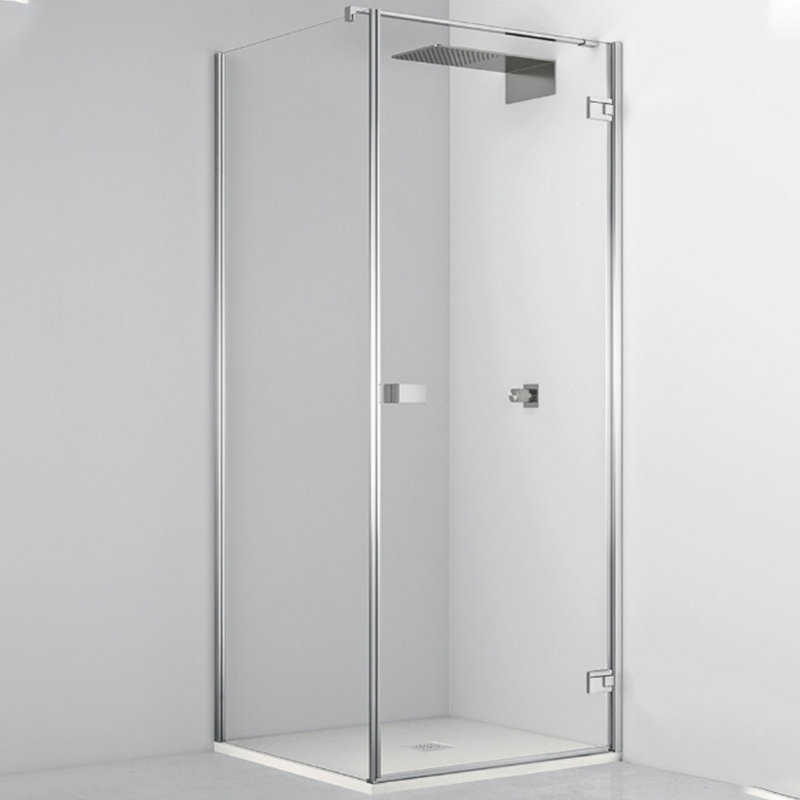 Square 6mm Inner Sliding Door Shower EnclosureThis square 6mm shower enclosure offers a simple elegant design that maximizes space in bathrooms, with inner sliding or sliding door options to prevent water splash and save room.View Product →
Glass Type and Finish: Clear, Low-Iron, Patterned or Coated
The glass type decides how the enclosure looks and how much cleaning it will take. Standard clear float glass transmits 89-90 percent of visible light and shows a green edge tint on 8 mm panels; low-iron ultra-clear glass pushes transmission above 91 percent and removes the green cast for a premium of 15-30 percent.
Standard clear float
- Transmission of 89-90 percent
- Iron oxide near 0.1 percent
- Green edge tint above 6 mm
- Lowest cost per square meter
Low-iron ultra-clear
- Transmission above 91 percent
- Iron oxide below 0.01 percent
- Neutral white edges, no green cast
- Premium of 15-30 percent
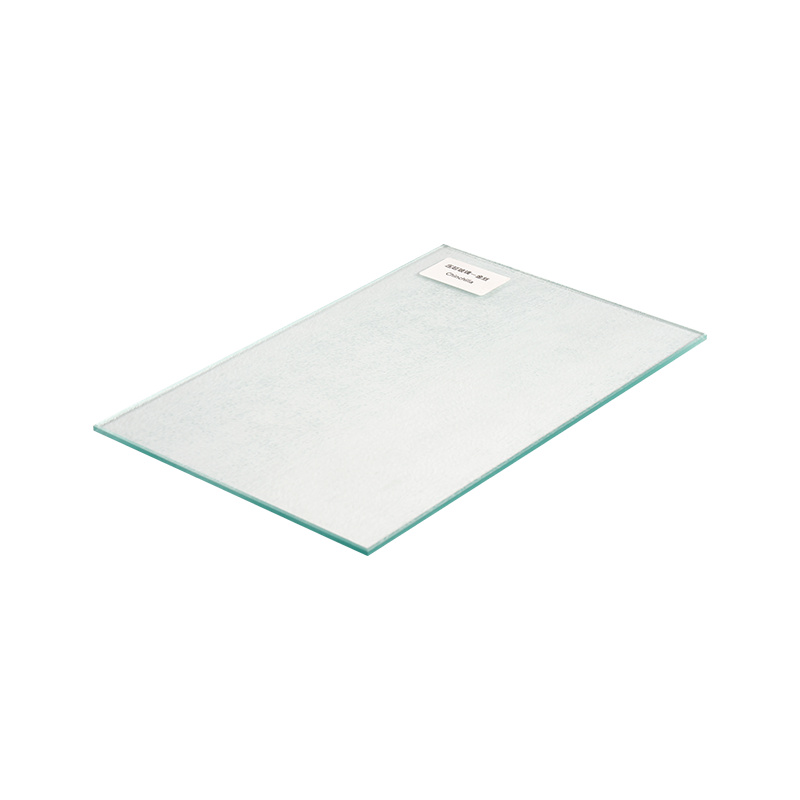
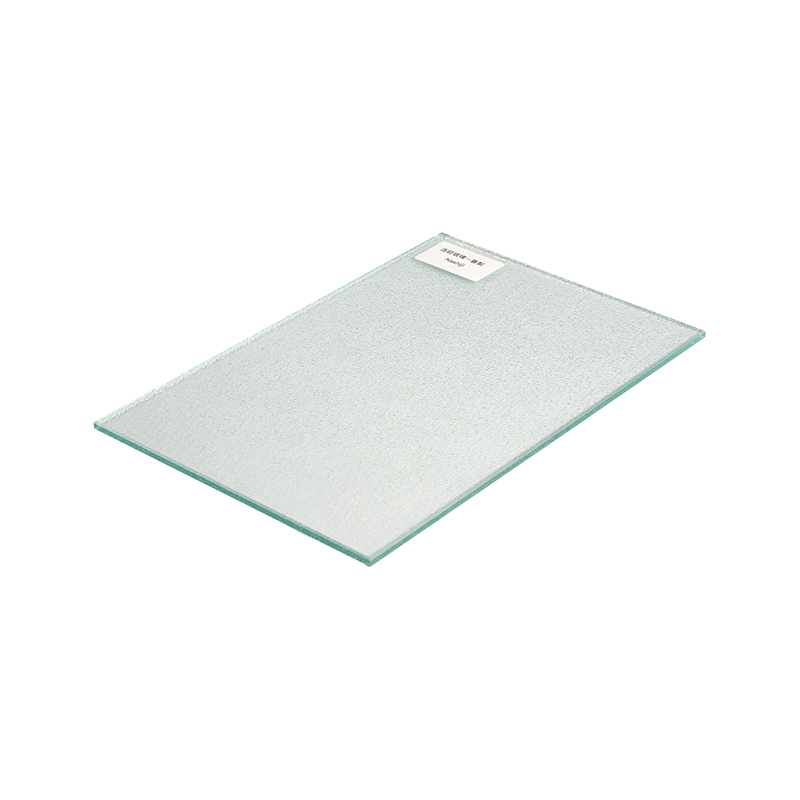
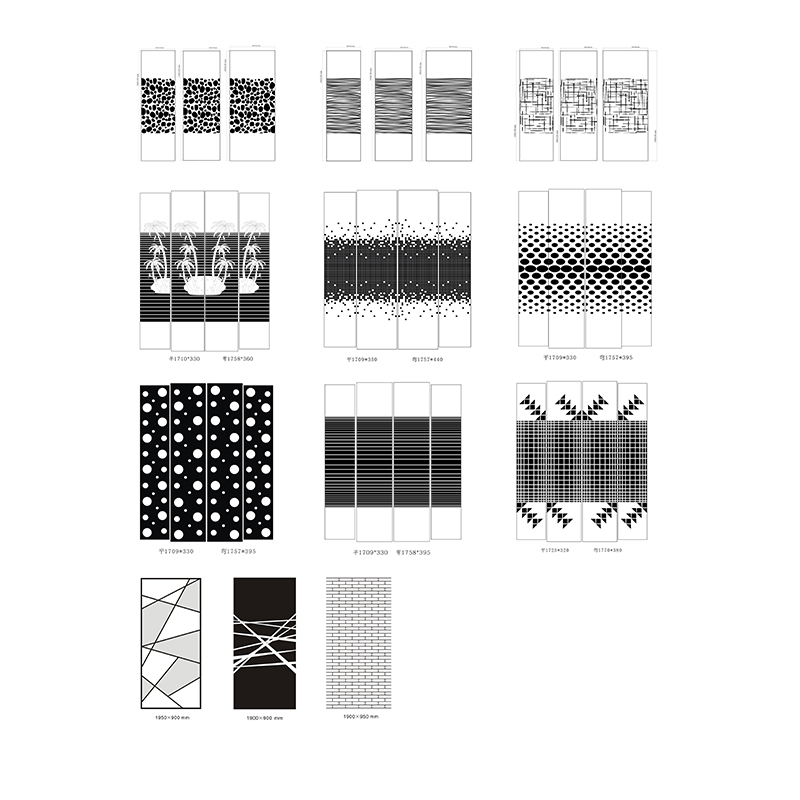
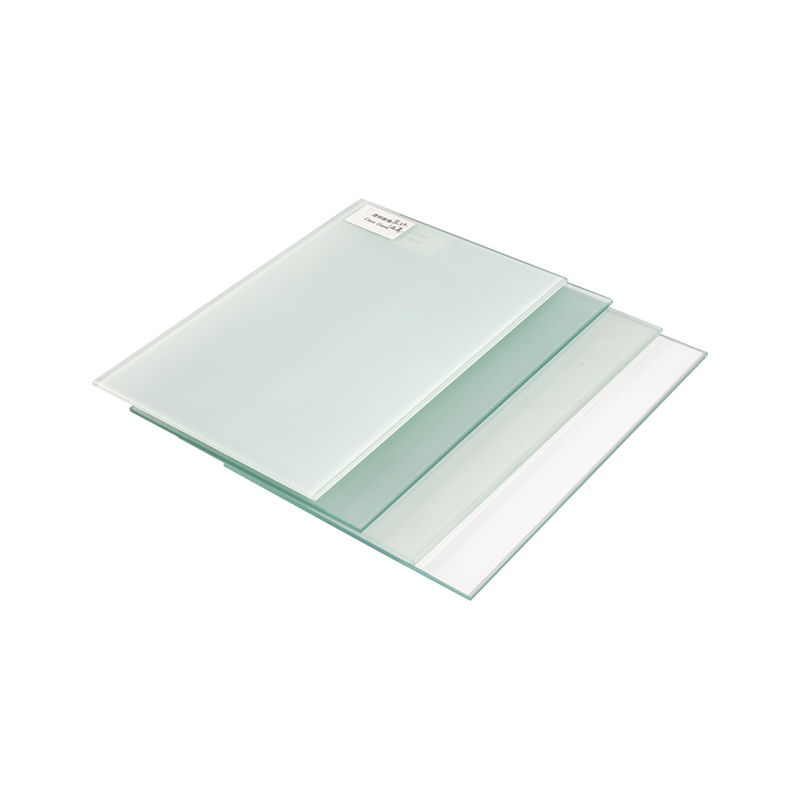
Four finish categories cover nearly every shower order: patterned glass for privacy, frosted or water-textured surfaces for diffused light, coated or back-painted panels that resist limescale, and tinted or reflective glass for glare control. Choose the finish before locking the thickness; surface treatment does not change the tempering class.
- Patterned or fluted glass hides fingerprints, but soap residue collects in the grooves, so pair it with a squeegee.
- Frosted and water-textured glass diffuses light for privacy and needs periodic descaling in hard-water areas.
- Coated and back-painted glass cuts limescale adherence, but a scratched coating stays visible.
- Tinted or reflective glass reduces glare and adds UV blocking for west-facing bathrooms.
The specification recommended most often for a frameless panel next to a bathtub is 8 mm low-iron fully tempered glass with a hard-coat finish: high transmission, no green edge, and a surface that sheds soap scum instead of holding it.
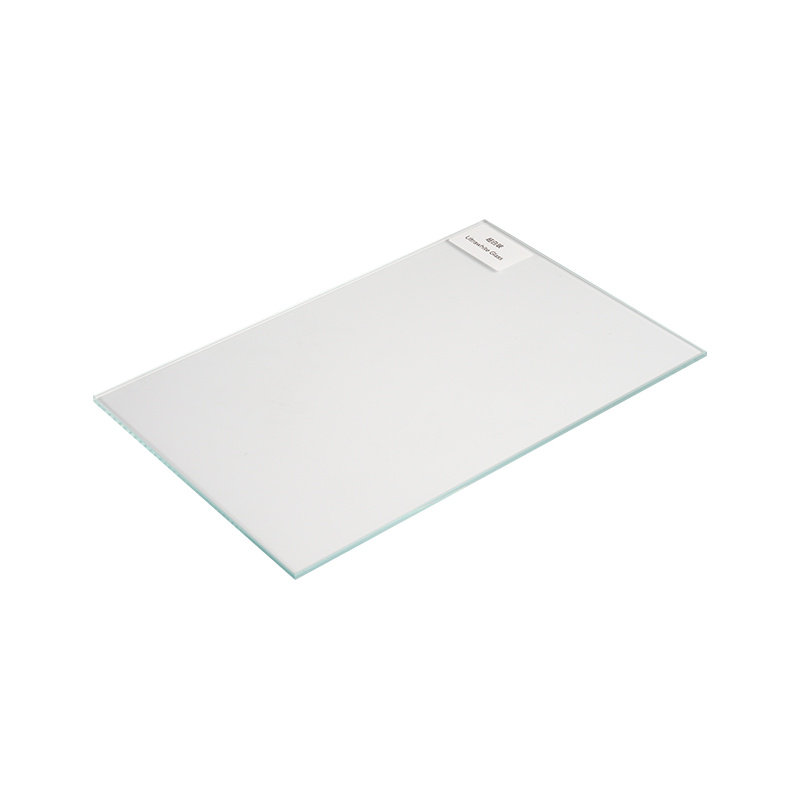 Tempered Clear Shower Glass Panels in Multiple ThicknessesThese tempered clear glass panels provide high transparency and safety, suitable for frameless shower screens where a certified tempering logo confirms factory-tested quality.View Product →
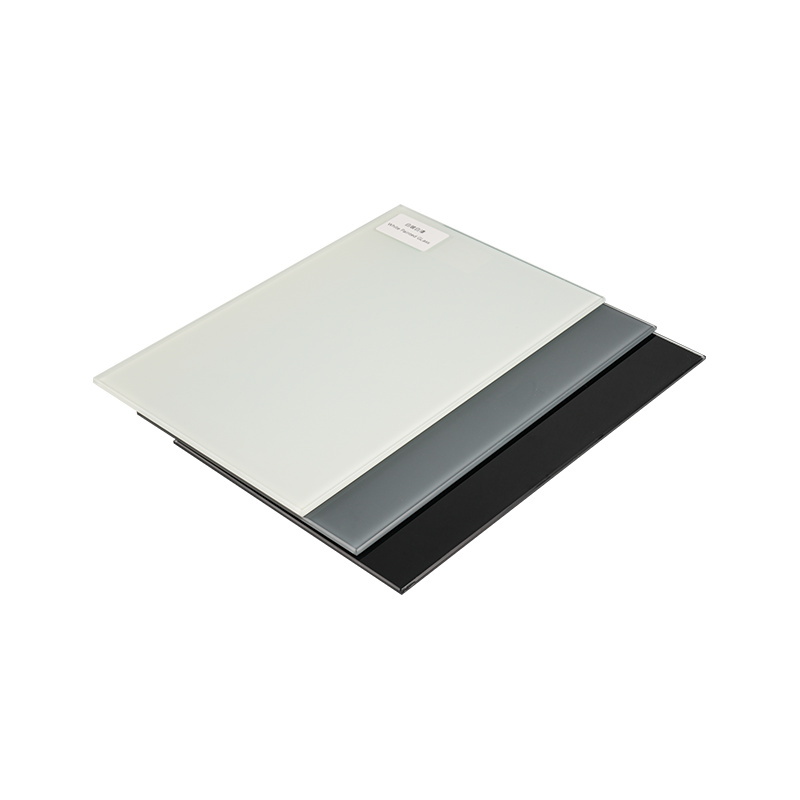 Customizable Easy-Clean Back-Painted Glass PanelsBack-painted glass with optional spray paint colors features a high-temperature baked coating that resists stains and is easy to wipe clean, ideal for personalized shower room accents.View Product →
Certifications and a Receiving Inspection Checklist
A certified tempered shower glass panel is traceable to a factory test certificate, and the fastest proof is the permanent tempering logo printed in one corner. If the logo is missing, the glass may still be tempered, but you cannot prove it to an inspector or a building authority.
For glass produced in China, 3C certification is mandatory for domestic shower glass; export orders most commonly request CE to EN 12150. SGS inspection reports add a third-party layer that importers increasingly require. A reliable factory sends these documents with the order confirmation, not after delivery.
- Look for the tempering logo, permanently printed or etched in a corner of every certified 5-10 mm panel.
- Stand at a 45-degree angle and check the reflection: fully tempered glass shows slight wavy distortion; a flat reflection means annealed or heat-strengthened glass.
- Run a finger along every edge: certified panels are ground and polished, with no open chips, because raw cut edges concentrate stress.
- Measure thickness with callipers: 6 mm nominal should read 5.8-6.2 mm, and 8 mm should read 7.8-8.2 mm.
A purchase-order clause that works: "The shower glass shall be fully tempered per EN 12150, 3C certified, edge-ground and polished, with the tempering logo visible on each panel." This single sentence eliminates most grey-market substitution.
Frameless Hardware: Hinges, Rods and Rollers for Tempered Shower Glass
The most common cause of a leaking or sagging shower door is undersized hardware, not the glass. A typical 800 x 2,100 mm frameless door in 8 mm glass weighs roughly 34 kg; two narrow hinges with a 4 mm pin cannot hold that load for long.
- Hinges: use 304 stainless steel, three for any 700-900 mm wide 8 mm door; precision-cast pivots spread the weight along the edge.
- Support rods: a panel wider than 1,100 mm, or one fixed to a plasterboard partition, needs a ceiling-mounted 304 stainless rod.
- Rollers: sliding doors need bearing pulleys with vertical adjustment; plastic wheels deform in steam and bind.
- Seals: magnetic or U-channel seals reduce rattling, but cannot fix a misaligned hinge line.
Order the glass and the hardware as one set. A factory that tempers and finishes in-house, such as MD Glass, produces the 304 stainless steel hinges, rods and rollers to match, so glass thickness and hardware load ratings come from the same engineering file.
To compare complete enclosure geometries before specifying hardware, browse the main product index and filter by door style and glass thickness.
Frequently Asked Questions
Is tempered glass mandatory for shower doors?
Yes in nearly every jurisdiction that enforces safety glazing rules. Wet areas require safety glass because people slip against the pane and because fractured annealed glass produces long sharp blades. Fully tempered glass meets both EN 12150 and GB 15763.2 fracture criteria.
What thickness of tempered shower glass should a homeowner choose?
For a framed screen up to 1,100 mm wide, 6 mm is sufficient. For frameless swing doors, use 8 mm with three hinges. Reserve 10 mm for panels wider than 1,400 mm, and brace those panels with a support rod or lintel bracket.
How can you tell whether installed shower glass is really tempered?
Three checks: the corner tempering logo, the slightly wavy reflection at a 45-degree angle, and the ground and polished edge finish. If the logo is absent, look for the waviness; a flat reflection means the glass was never tempered.
Can a tempered shower glass panel be cut or drilled on site?
No. Cutting, notching or drilling after tempering breaks the compressed surface layer and can cause spontaneous fracture days later. All holes and edge profiles must be machined before the glass enters the furnace, which is why custom panels should come from a processor with in-house cutting and tempering capability.