

 中文简体
Specifying PVB laminated glass is a performance contract, not a product pick. A shop drawing that reads "6 mm tempered + 0.76 mm PVB + 6 mm tempered" commits the owner to a specific outcome: when a storm-driven branch hits that skylight, the panel may crack, but it stays in the frame instead of dropping glass on the floor below. This guide covers what PVB laminated glass is, what changes when the interlayer shifts from 0.38 mm to 1.52 mm, how PVB compares with EVA and SGP, and the sourcing checks that keep a PVB order from turning into a field failure.
What PVB Laminated Glass Is and How It Is Made
PVB laminated glass is a safety glazing product made of two or more glass panes permanently bonded by a polyvinyl butyral (PVB) interlayer under heat and pressure. The film does the structural work: when the glass fractures, the interlayer absorbs impact energy and holds the fragments in place, keeping the opening closed.
Core definition PVB interlayer: a thermoplastic resin film placed between glass plies and fused at roughly 130 to 150 degrees Celsius under 10 to 15 bar of autoclave pressure, creating a panel that stays intact after breakage.
Lamination requires clean conditions. Sheets are cut, washed, and inspected, then the film is positioned, the stack is pre-pressed to remove air, and the autoclave cycle permanently welds the layers. Trapped air later becomes a visible bubble, which is why optical quality depends on a dedicated laminating line rather than a cutting and tempering shop alone.
PVB laminated glass can be built from annealed, heat-strengthened, or fully tempered plies. Tempering supplies bending strength; lamination supplies post-breakage retention. Automotive windshields use two thin annealed plies with a 0.76 mm film, a construction proven for almost a century, and the same logic now protects facades, skylights, balustrades, and shower screens.
99% of UV-A and UV-B is blocked by a 0.76 mm PVB interlayer, which is why museums, shopfronts, and light-sensitive interiors use this construction as a default.
PVB Interlayer Thickness: What 0.38 mm to 1.52 mm Changes
Interlayer thickness is the single strongest specification lever in PVB laminated glass because each 0.38 mm step changes impact resistance, acoustic damping, and code compliance more than any other variable. Standard PVB film is cast at 0.38 mm and stacked for heavier duties.
| Interlayer | Typical build-up | Main effect | Representative use |
| 0.38 mm | 3 + 0.38 + 3 = 6.38 mm | Basic shard retention | Interior partitions, balustrade infill |
| 0.76 mm | 6 + 0.76 + 6 = 12.76 mm | Impact resistance and sound damping | Skylights, shopfronts, shower screens |
| 1.14 mm | 6 + 1.14 + 6 = 13.14 mm | Higher impact retention | Schools, low-rise security glazing |
| 1.52 mm | 6 + 1.52 + 6 = 13.52 mm | Storm and security grade | Hurricane zones, forced-entry glazing |
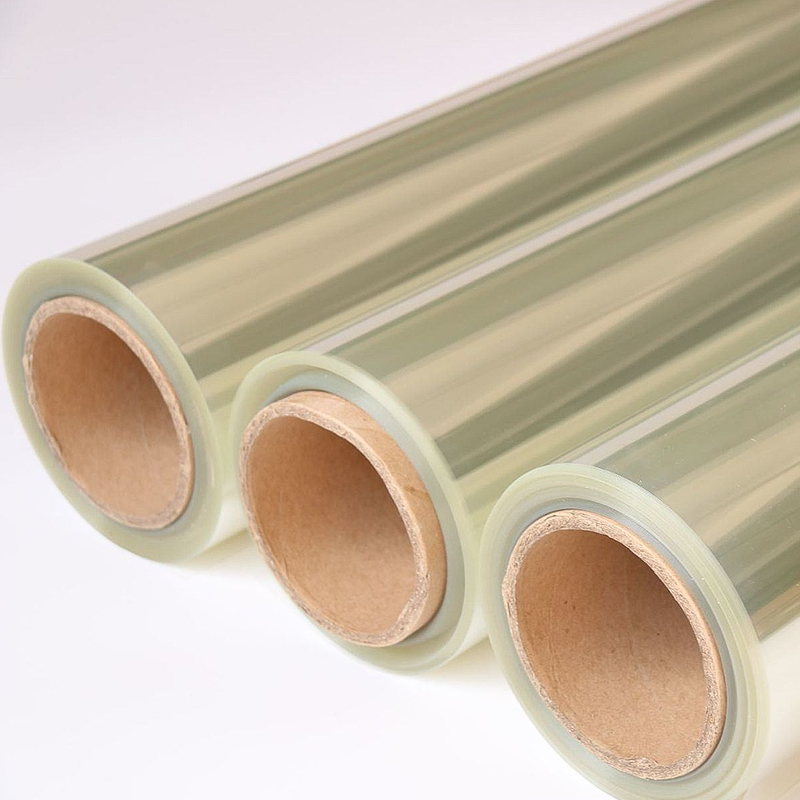
Hurricane-rated systems often stack two 0.76 mm films to reach 1.52 mm. In decorative or wired glass, the film type and thickness interact with the pattern, so the supplier should confirm available interlayer options for the selected build.
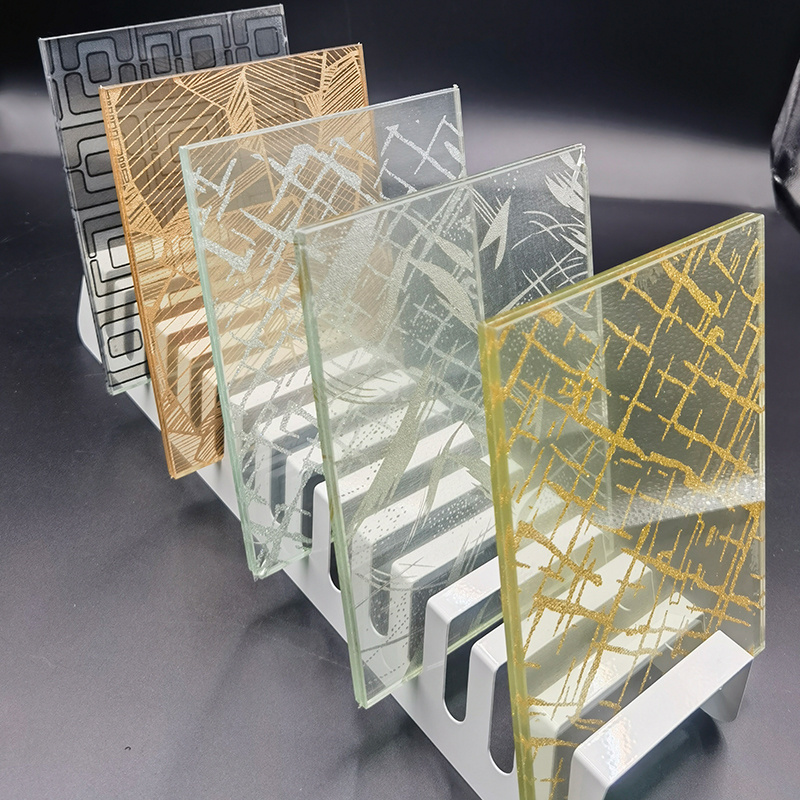 PVB, EVA and SGP Interlayers for Textured and Wired Laminated GlassThis product covers multiple polymer interlayer film options, thicknesses, and textured or wired configurations. It appears where the discussion shifts from hurricane-rated stacking to how film choice affects cost and failure behavior, making it relevant for specifying the right interlayer.View Product →
6.38 mmMinimum common laminated build
0.38 mmBase PVB cast film unit
2Minimum number of glass plies
13.52 mmTypical storm build with 1.52 mm film
PVB vs EVA vs SGP: Which Interlayer Belongs in Your Laminated Glass
Use PVB for transparent architectural and automotive glazing, choose EVA for moisture-exposed edges and curved assemblies, and specify SGP when a broken panel must stay almost rigidly in its frame. Each interlayer family changes the cost and the failure mode of the finished glass.
PVB dominates because of optical clarity, consistent adhesion, and lower cost. EVA (ethylene-vinyl acetate) tolerates edge moisture better and is common in curved glass, step-edge designs, and photovoltaic laminates. SGP (an ionomer interlayer) delivers far higher residual strength after breakage and is typically reserved for balustrades, overhead glazing, and storm or impact systems.
| Property | PVB | EVA | SGP |
| Optical clarity | Excellent | Good | Excellent |
| Edge moisture resistance | Moderate | High | High |
| Post-breakage retention | Good | Good | Superior |
| Typical cost index | Baseline | Moderate premium | Highest premium |
| Common roles | Windows, facades, showers | Curved and encapsulated glass | Railings, canopies, storm glass |
The practical rule is short: if the edge will be exposed or the panel strongly curved, EVA is more forgiving; if the glass is a railing or a canopy, SGP removes most of the human-impact risk. For most flat glazing, PVB remains the most tested and economical choice. The full difference between PVB, EVA, and SGP embossed films also matters when texture and light diffusion are part of the design.
Measured PVB Laminated Glass Performance: UV, Sound, and Impact
PVB laminated glass measurably outperforms monolithic glass of equal thickness in UV rejection and acoustic damping, and it removes the injury risk of glass falling from a broken frame. Because the viscoelastic film converts kinetic energy into heat and holds shards, the following values appear consistently in accredited test reports.
Figure 1: Typical sound transmission class (STC) values for common glazing build-ups
6 mm monolithic29
6.38 mm PVB32
6.76 mm PVB34
9.52 mm PVB36
12.38 mm PVB38
Approximate single-number ratings; final STC depends on panel size, framing, and airspace configuration.
- UV control: a 0.76 mm PVB film stops more than 99% of UV-A and UV-B radiation, protecting interiors, artwork, and fabrics.
- Sound damping: the viscoelastic interlayer absorbs acoustic vibration, typically raising STC by 3 to 6 points over a monolithic pane of similar mass.
- Safety retention: after breakage, the film keeps the glass mass in the frame, and the opening remains temporarily closed until replacement.
- Design flexibility: tinted interlayers, printed films, wired constructions, and colored PVB are available without changing the safety behavior.
UV rejection is an interlayer property, not a glass property. Whether the plies are 4 mm or 12 mm, a 0.76 mm PVB film delivers the same ultraviolet barrier.
Sourcing PVB Laminated Glass: What to Verify Before You Order
Verify interlayer thickness, film type, edge quality, and certification before production starts, because once the glass is sealed, the PVB layer cannot be inspected from the outside. Most field failures trace back to specification gaps, not to the film itself.
- State the exact build-up in the purchase order, for example "4 mm tempered + 0.76 mm clear PVB + 4 mm tempered." The word "laminated" alone leaves the interlayer thickness to the factory default.
- Specify the ply state: annealed, heat-strengthened, or fully tempered. Hybrid units with one tempered and one annealed ply exist and behave differently under load.
- Request the relevant certificates: China 3C for architectural safety glass, CE marking and EN 14449 for European projects, and test evidence such as ISO 12543-4 water-bath exposure for edge delamination.
- Confirm the PVB film grade and the humidity control on the laminating line. Film storage and line cleanliness determine bubble and adhesion defects.
- Check the edge treatment. PVB edges are moisture-sensitive, so exterior panels normally require sealed edges or insulating glass units; some decorative products switch to EVA for this reason.
- Measure the sample. Total thickness equals plies plus film, so a claimed 6.38 mm panel should read 6.38 mm on a caliper within normal tolerance.
Zhejiang MingDing Glass Technology Co., Ltd. (MD Glass), a glass processor in Zhejiang with more than 17 years of experience, laminates tempered, patterned, and wired glass in-house, which shortens the verification chain when a buyer needs both a film specification and a production history. When aesthetics matter, PVB interlayers also carry color; radiation-proof colored laminated glass provides tint and UV protection in a single sheet.
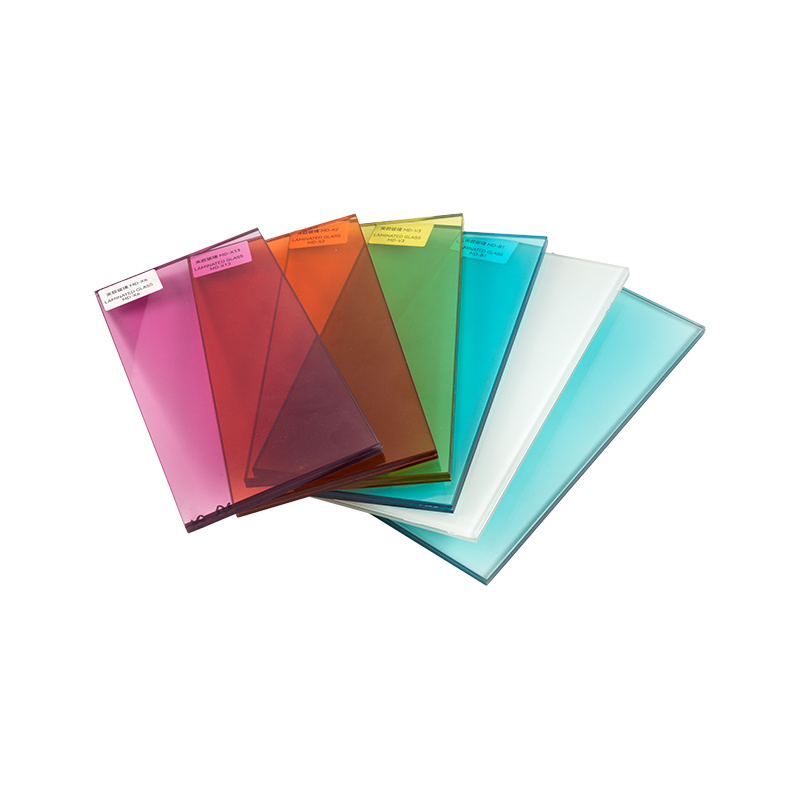 Colored Laminated Glass with EVA and PVB Film OptionsThis item offers radiation-shielding colored laminated glass with EVA and PVB interlayers in customizable tints. It is highlighted after a supplier background note, and before acoustic comparisons, helping buyers evaluate both aesthetic and performance aspects such as UV blocking and sound insulation.View Product →
Before finalizing an order, compare the acoustic behavior of the proposed build, especially for wired glass where the mesh changes panel stiffness. Our test data on how interlayer materials in wired laminated glass affect sound insulation shows measurable differences between PVB and EVA that deserve a place in the specification.
PVB Laminated Glass: Questions Procurement Teams Actually Ask
These four questions come up in nearly every PVB laminated glass inquiry, and the answers determine the build-up that ends up in the contract.
Can PVB laminated glass be tempered?
Yes. Fully tempered or heat-strengthened plies are laminated with the same PVB film; the finished panel combines the flexural strength of tempering with the fall-out retention of lamination, and the autoclave cycle does not relax the tempering of the glass.
Which interlayer is better for shower screens, PVB or EVA?
For flat rectangular shower screens, PVB is the more common and more economical choice because it is clear, strong, and well tested. For strongly curved panels or exposed decorative edges, EVA is safer because of its better moisture tolerance along unfinished edges.
Can you see the PVB film in a finished panel?
On the edge, yes: two glass plies show a thin translucent film line between them. On the face, a correctly laminated panel shows no bubbles, particles, or clouding. Total thickness is the fastest field check, since a panel stamped 6.38 mm is built from 3 mm plus 0.38 mm film plus 3 mm.
Does PVB laminated glass block solar heat as well as UV?
UV is blocked by the film, but solar heat control comes from the glass. Tinted plies, low-emissivity coatings, or tinted interlayers manage heat gain; projects targeting both daylight and low solar gain combine a clear PVB build with low-e coated glass rather than relying on the interlayer alone.