

 中文简体
中文简体As of 2026, fluted tempered glass has moved from a niche architectural accent to a standard entry in shower-screen, partition, and cabinet programs, yet most specification sheets still fail to answer the three questions buyers actually ask: how dense the fluting should be, which thickness to specify, and whether the groove pattern survives tempering unchanged. The short answers are that groove pitch drives the privacy effect, that 6 mm and 8 mm cover most wet-area installations, and that tempering changes the glass internally rather than flattening its surface relief. This guide treats fluted tempered glass as a processed product: groove-density behavior, safety parameters, and the factory-level checks that determine whether a panel performs as specified.
What Tempering Actually Changes in Fluted Glass
Tempering changes the stress state of fluted glass, not its decorative geometry. The groove profile is created while the glass is still a molten ribbon: it passes between forming rollers, one engraved with the flute pattern, and the reeded surface sets during cooling. After cutting and edge work, the panel is reheated to roughly 620-700 degrees Celsius and rapidly quenched with air. The thermal cycle does not melt the ridges flat; the relief is already fixed in the sheet.
What changes is internal stress. The two surfaces are forced into compression at roughly 69-100 MPa, while the core stays in tension. When the panel breaks, that stress balance releases into small granular fragments rather than long shards, which is why building codes accept the material for doors, screens, and partitions without extra guarding. None of this depends on the groove pattern, so fluted panels carry the same safety classification as flat panels of equal thickness.
At 6 mm thickness, tempered fluted glass withstands roughly four to five times the impact energy of annealed glass of the same profile.
One practical consequence drives every ordering decision: all cutting, notching, drilling, and edge polishing must be finished before the tempering run. A fluted panel cannot be resized on site, and post-tempering modification voids its safety rating. Factories such as Zhejiang MingDing Glass Technology Co., Ltd. (MD Glass), a patterned and tempered glass manufacturer in Zhejiang, China, therefore process fluted sizes and cutouts in the same schedule as the tempering furnace.
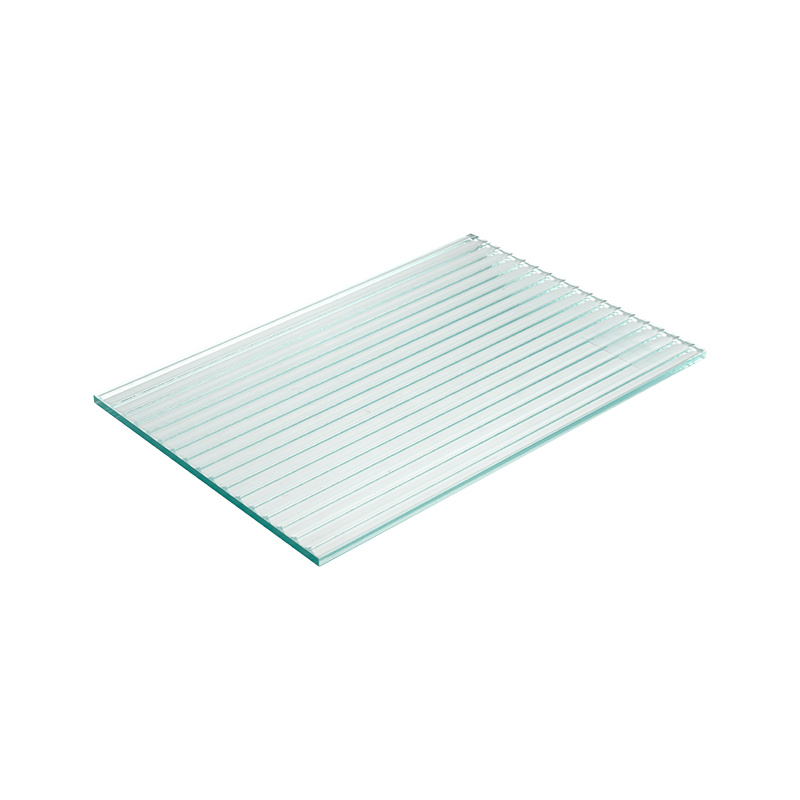 Narrow Reeded Fluted Tempered Glass for Shower and DecorThis 4-10mm fluted glass uses vertical ridges to soften and obscure views while transmitting light. It suits shower partitions and decorative panels where controlled privacy and bright interiors are needed.View Product →
Groove Density Decides the Visual Result
Groove pitch, not glass thickness, sets the balance between privacy and transparency in fluted tempered glass. Each vertical ridge works like a small cylindrical lens: it refracts light across a slightly different angle, so the image behind the panel is stretched and softened. The closer the ridges, the more refraction surfaces the light crosses, and the less defined the shapes behind the glass become.
Measurements of fluted panels at different groove densities confirm the pattern: dense fluting (around 5 mm pitch) blurs objects behind the glass strongly, while wide fluting (around 15 mm pitch) leaves a mostly clear view with only a linear distortion of the outline. The table below translates that behavior into selection terms.
| Groove pitch | Privacy level | Light character | Best use |
| 5 mm | High | Strong diffusion, shapes blurred | Shower screens, partitions |
| 10 mm | Medium | Balanced, softened outlines | Cabinets, wardrobe fronts |
| 15 mm | Low | Subtle, mostly clear view | Door inserts, balustrades |
Higher groove density blurs objects behind the glass; lower density keeps a clearer view. Choose the pitch by what sits behind the panel, not by the pattern you see from the front.
This is why fluted tempered glass performs differently in a shower than in a cabinet front. In a shower, the goal is privacy with daylight, so a 5 mm or 8 mm pitch is common; in a cabinet, contents should stay identifiable, so a 10-15 mm pitch works better. Specify the pitch explicitly when ordering; two suppliers can both call a panel fluted and deliver visibly different levels of privacy.
Thickness, Tolerances, and Certification for Reliable Performance
4 mm, 6 mm, 8 mm, and 10 mm cover nearly every fluted tempered glass application, and 6 mm plus 8 mm dominate wet areas. Thickness affects mechanical strength, deflection under load, and the maximum panel width the tempering line can handle; it does not change the privacy behavior of the grooves.
4 mm Light cabinet fronts and door inserts where weight matters more than impact resistance.
6 mm Default for shower screens and enclosure panels up to roughly 750 mm wide.
8 mm Partitions, frameless doors, and wider spans that need stiffer panels.
10 mm Heavy sliding doors and commercial balustrade infills with high abuse loads.
Tempering standards give the material its safety claim: EN 12150 governs thermally toughened glass in Europe, the 3C system covers impact safety in China, and ASTM C1048 defines classification in North America. A compliant supplier tests fragmentation in a controlled area after tempering; the fingerprint test is a mesh of small particles, not a few large shards. The tempering furnace also sets the practical maximum panel size, so confirm the factory's true capacity before finalizing large fluted dimensions.
MD Glass holds 3C and CE certification for its tempered production, with certificates covering 4 mm, 5 mm, 6 mm, and 8 mm thicknesses across its clear and patterned ranges. When a project needs both fluted panels and plain glazing, the same line can supply matching clear tempered glass so the whole bathroom program stays consistent in tint and edge quality.
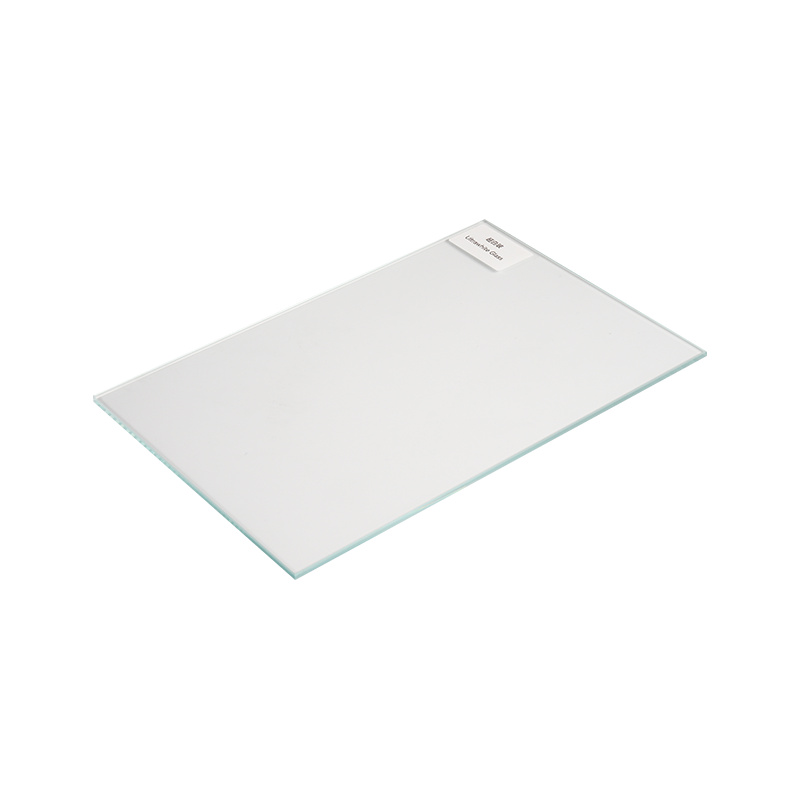 Clear Tempered Glass for Shower Room ApplicationsMatching clear tempered glass in 4-12mm thicknesses supports a consistent bathroom program alongside fluted panels. It offers high hardness and safety, ideal for shower screens and similar glazing.View Product →
Applications: Where Fluted Tempered Glass Earns Its Place
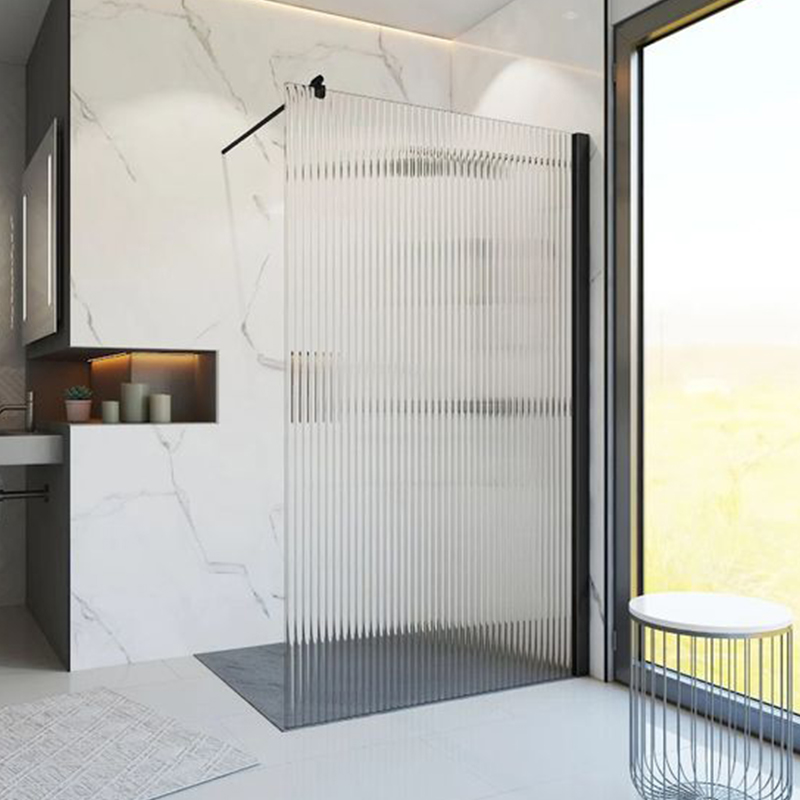
Shower screens and cabinet fronts are the two applications where fluted tempered glass justifies its cost with a measurable payoff: daylight passes through while the view stays controlled. In shower rooms, grooved panels deliver privacy without a frosted finish, which keeps the space bright and removes the need for a separate privacy film.
- Shower screens and wet-dry separators: 6 or 8 mm, high-density pitch, often combined with clear tempered panels.
- Room dividers in hotels and offices: 8 mm freestanding panels with polished edges and drilled fittings.
- Kitchen cabinet and wardrobe fronts: 4 or 6 mm, low-to-medium density so contents stay recognizable.
- Door glazing and balustrade infills: 8 or 10 mm where code requires safety glass at low height.
Low-density fluting, 12-15 mm pitch
Keeps silhouettes readable, diffuses glare softly, and reads as a subtle texture. Best for cabinet fronts, display partitions, and spaces where people need to recognize objects behind the glass.
High-density fluting, 5-8 mm pitch
Blurs details almost completely while transmitting daylight. Best for shower enclosures, bathroom windows, and office meeting rooms where privacy trumps clarity.
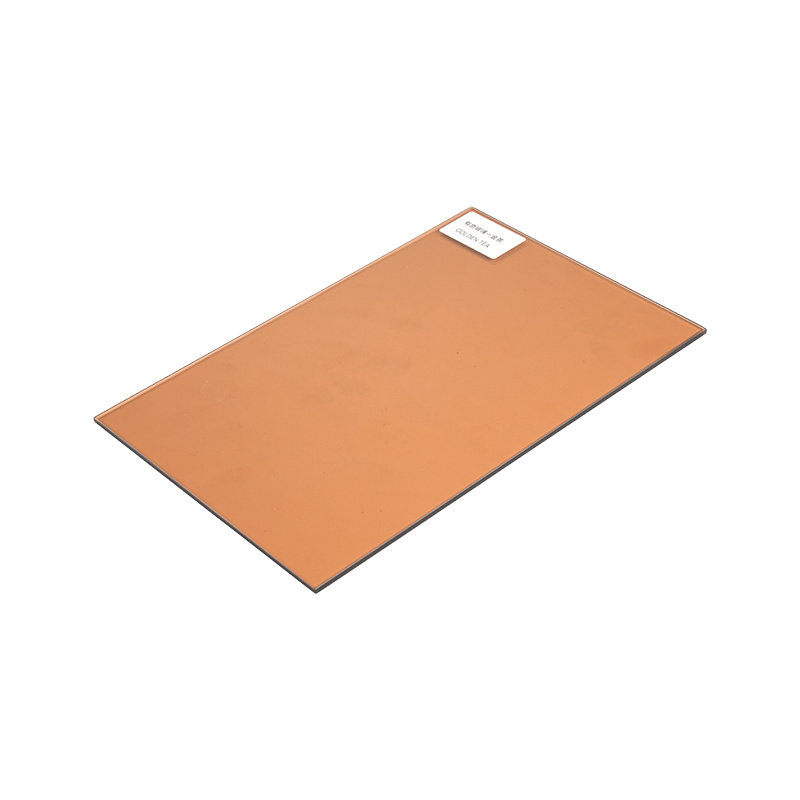
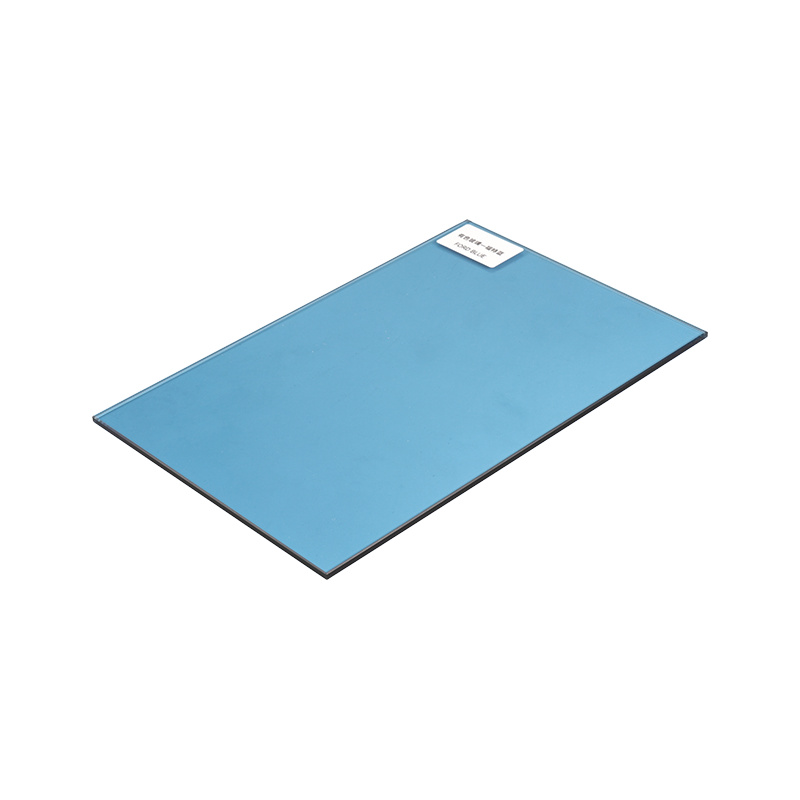
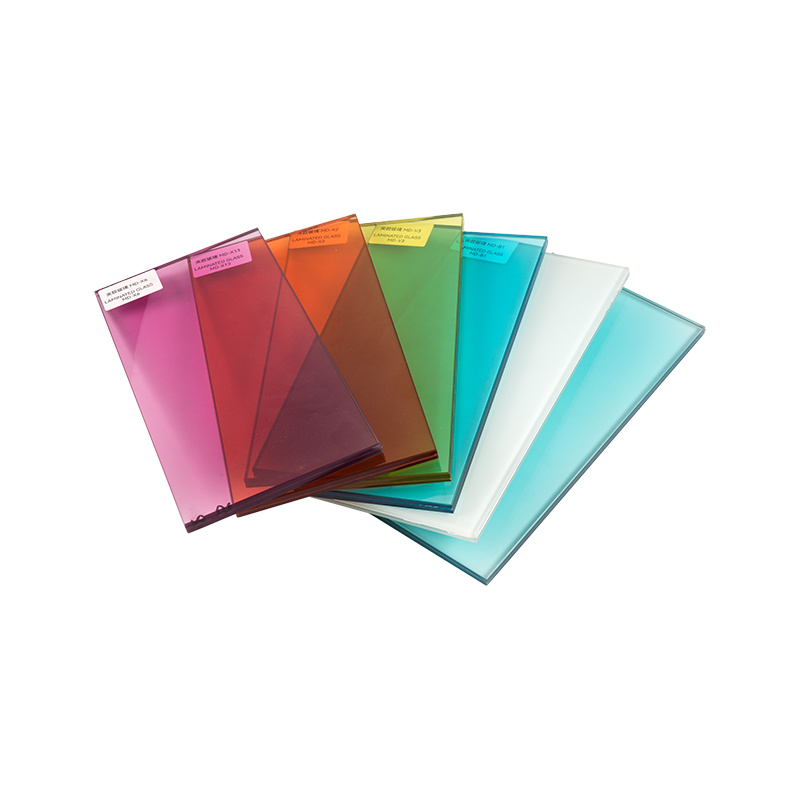
One maintenance reality drives shower specification: the grooved face collects soap residue and hard-water film in daily use. Specify an easy-clean back-painted finish on the interior face of a shower panel, or plan for a squeegee routine; MD Glass offers back-painted and baked-enamel finishes in custom colors precisely for this application, so the fluting stays decorative rather than becoming a cleaning burden.
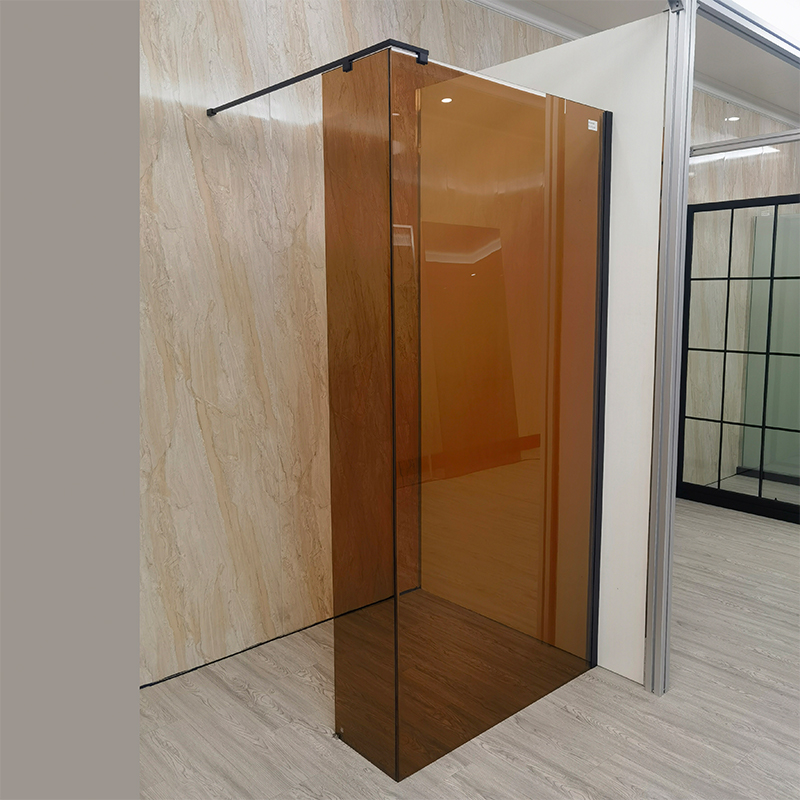
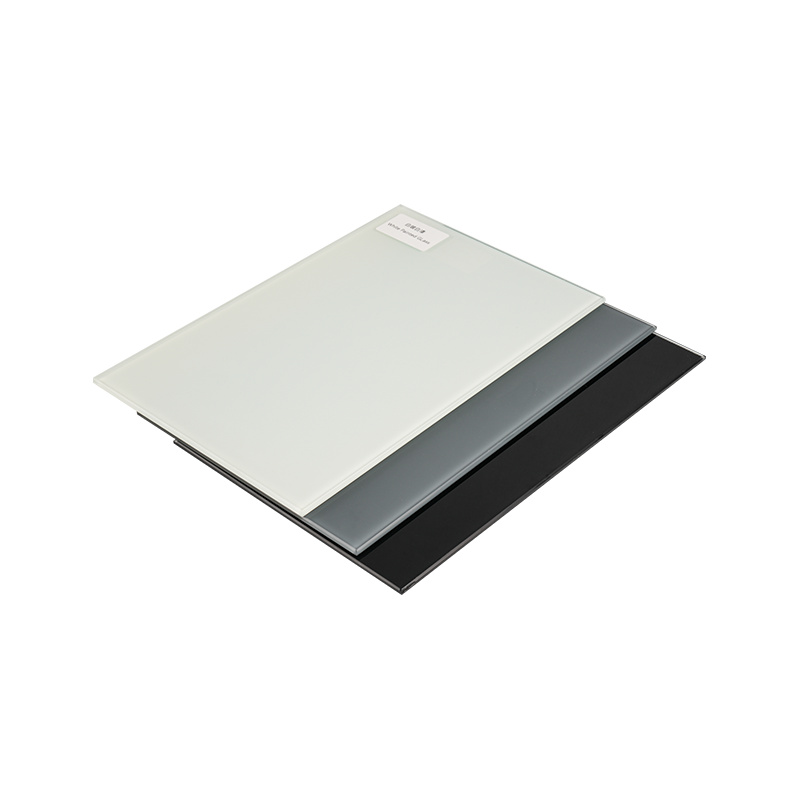 Custom Color Back-Painted Tempered GlassBack-painted or baked-enamel glass offers a smooth, easy-to-clean surface that resists soap film and hard-water buildup. Custom spray colors allow the fluted design to remain decorative in showers.View Product →
Factory Sourcing: What to Check Before You Order
Buy fluted tempered glass on groove consistency, tempering certification, and pre-tempering processing; price alone hides all three. A low quote usually comes from a line that skips surface inspection or stretches the tempering cycle, and those defects show up after installation.
- Confirm the groove pitch and depth with a physical sample, not a photo; two 10 mm products can differ in edge sharpness and depth enough to change the light effect.
- Match the tempering standard to the destination market: 3C for China, CE/EN 12150 for Europe, ASTM C1048 for North America, and ask for the certificate covering your thickness.
- Complete every cutout, hole, notch, and edge polish before tempering; post-tempered glass cannot be processed, and field drilling is a safety risk.
- Ask about roller-wave distortion on large panels; patterned glass can show this more visibly than clear glass under raking light.
- Check packaging for fluted surfaces, which need interleaving paper or protective film to avoid surface contact damage in sea freight.
The factory context matters as much as the sample. MD Glass, operating from a 20,000 square meter plant near Shanghai and Ningbo ports, runs an annual tempered output around 50,000 tons with over 17 years of glass processing history, which is the scale that keeps groove patterns and tempering parameters consistent across repeat orders. As the broader patterned glass category expands beyond fluted profiles, the same production discipline carries over to cloth, water, and pear textures used in the same applications.
The cheapest quote on fluted tempered glass usually comes from the factory that skips surface inspection. Ask how groove depth is measured and how rejected panels are documented; a supplier that cannot show its rejection data cannot guarantee your batch either.
Fluted Tempered Glass: Answers to Common Specifier Questions
Is fluted tempered glass strong enough for shower doors?
Yes. Tempered fluted glass in 6 mm or 8 mm meets the same impact and fragmentation standards as flat tempered glass of equal thickness; the groove pattern does not lower the safety classification.
Can fluted tempered glass be cut or drilled on site?
No. Once tempered, the panel cannot be cut, drilled, or edge-worked; all sizing, notching, and polishing must be completed before the tempering cycle, and field modifications void the safety rating.
Does fluting reduce the amount of light that passes through?
Fluting scatters light rather than blocking it, so the room stays bright while the view is controlled. Total visible light transmission remains close to the base glass and is comparable to a frosted finish, but with a directional vertical texture.
What is the maximum size for fluted tempered glass?
The limit is set by the tempering furnace, so it varies by factory; many flat lines accept panels up to roughly 2400 by 3600 mm, and the usable width can drop for patterned or thicker glass. Confirm the line size before you finalize dimensions.