

 中文简体
A procurement manager for a European bathroom brand recently asked whether we could produce a 6 mm fluted screen that kept daylight flowing into the shower while blocking a clear view from outside. The answer was textured tempered glass, a narrow-reeded panel that resolved both requirements in one product. That combination is why textured tempered glass has moved from a niche decorative option to a specification standard in shower enclosures, interior partitions, and furniture: it joins a patterned surface to a base material that carries roughly five times the impact strength of annealed glass.
Processors now offer more than a dozen texture families, from water-like ripples to fine cloth effects, and each one changes light transmission, privacy, and cleaning behaviour in measurable ways. For buyers, the decision is no longer simply "patterned or plain." It is about matching a specific texture to a safety grade, a thickness, and an application.
5xImpact strength of textured tempered glass versus annealed glass
650-700Degrees C tempering furnace range that creates the safety stress layer
40-50%Typical light transmission of printed silk-screen textured panels
3C + CECertification marks that verify safety performance on finished panels
What Is Textured Tempered Glass?
Textured tempered glass is a heat-strengthened safety glass that carries a decorative surface structure on one or both faces. The structure is produced in one of two ways: it is rolled into the glass ribbon while the glass is still soft, or it is applied as a printed, frosted, or coated finish after the tempering cycle.
Textured tempered glass is a safety glass product that combines a decorative surface pattern with the compressive stress layer created by controlled heating and rapid quenching, giving it higher impact resistance and safer breakage behaviour than annealed glass.
The manufacturing route determines performance. Rolled textures such as fluted, water, cloth, and pear patterns become part of the glass body; they cannot peel, wear off, or be scratched away, and they survive the furnace without distortion because the relief is embossed into the material itself. Surface-applied textures such as silk-screen ink or sandblasted frosting are added after tempering, which allows sharper patterns and brand colours but makes the finish dependent on coating quality and handling care.
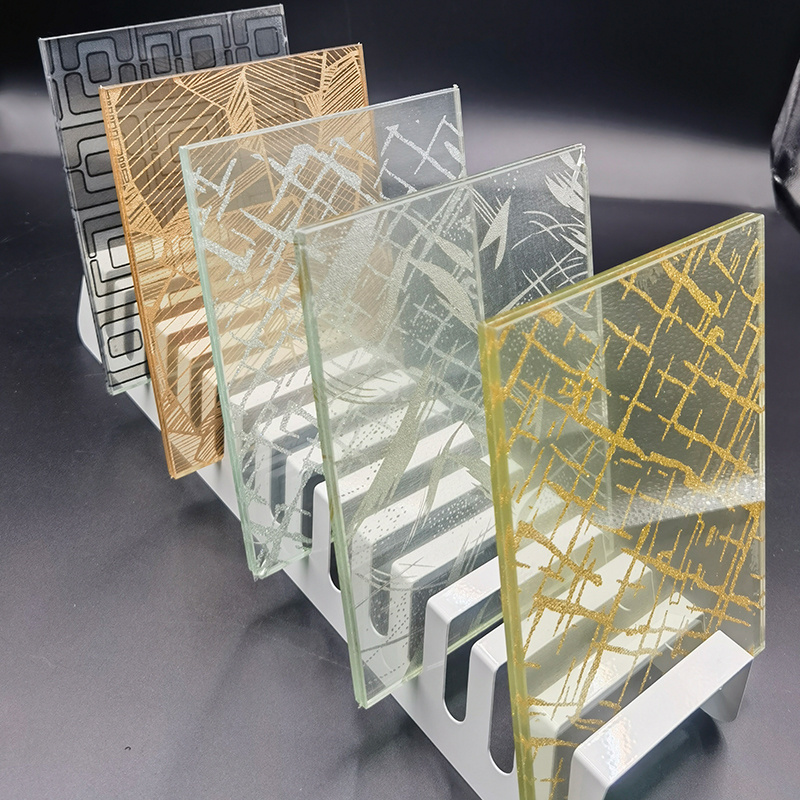
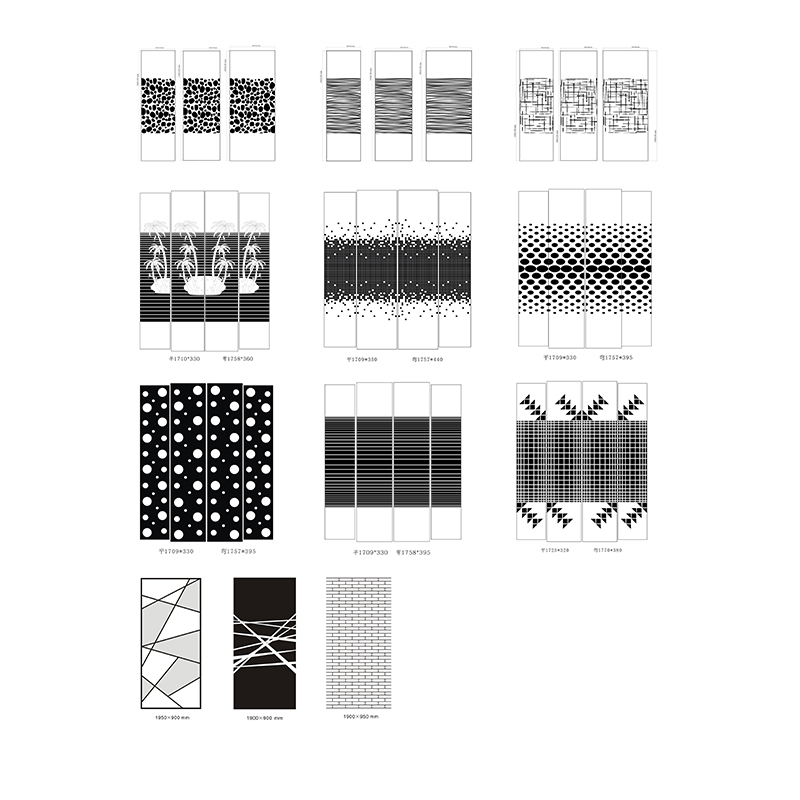 Silk-screen printed textured glass in white, gold, and blackThis high-temperature silk-screen technique creates durable patterns on glass, offering personalized colors and designs. Since the ink is fused, it resists peeling and fading, making it a dependable option for decorative interiors and commercial spaces.View Product →
Why Tempering Does Not Wipe Out the Texture
Texture and strength are created in two separate steps, and the sequence is the reason the product behaves reliably. The relief survives tempering because it is part of the glass mass, not a surface film that could soften or flow.
- Texture is rolled into the ribbon during forming while the glass is still soft, creating a relief depth of 0.2 to 0.8 mm depending on the pattern.
- Panels are cut to order, and edges are ground or polished to remove micro-cracks before the thermal cycle.
- The panel is heated to 650 to 700 degrees C and then rapidly quenched with air, which locks the surfaces in compression and gives the glass its safety performance.
- If a printed or coated finish is specified, it is applied after tempering so the ink or coating never passes through the furnace.
Rolled textures survive tempering because they are embossed into the glass body itself; printed textures are applied afterwards, so the two routes demand different quality-control checks at the factory.
Textured Tempered Glass Types Compared
The texture family is the main variable that controls privacy, daylight, and the right application. The design logic of patterned glass carries directly into tempered versions, with one extra check: the pattern must be eligible for the tempering line. The table below sorts the most common options.
| Texture type | Production method | Light transmission | Primary use |
| Clear tempered | None, flat ribbon | 89-91% | Shower screens, open layouts |
| Fluted / reeded | Rolled vertical ribs | 80-85% | Partitions, facades, cabinet fronts |
| Water-textured | Rolled irregular relief | 72-78% | Bathroom screens, decorative panels |
| Cloth-textured | Rolled fine matte relief | 65-70% | Wardrobe doors, hotel interiors |
| Pear / nashiji | Rolled granular matte | 55-62% | High-privacy shower rooms |
| Silk-screen printed | Ink applied after tempering | 40-50% | Branding, signage, decorative walls |
Typical light transmission by texture family, 8 mm panel
Clear
Fluted
Water
Cloth
Pear
Silk-screen
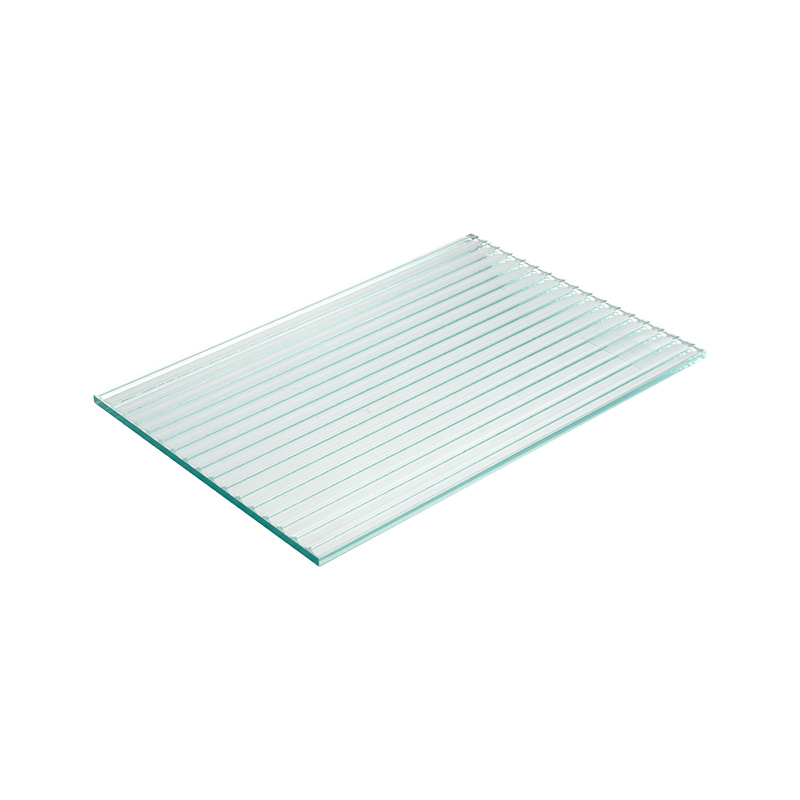 Narrow reeded or corrugated fluted glass for showers and décorWith concave and convex lines, this translucent glass lets light through while limiting visibility, ideal for shower partitions or home accents. Because relief depth varies by supplier, verifying the light-transmission value at your chosen thickness is essential.View Product →
Do not rely on the pattern name alone. Two suppliers can call a panel "water-textured" and deliver different relief depths and transmission values. Ask for the light-transmission number measured on the exact thickness you intend to buy.
Specifications to Verify Before Ordering
Textured tempered glass performs well only when the specification covers thickness, tolerances, edge finishing, and certification. Pattern choice is the first decision, not the last.
- Thickness: 4 to 12 mm is the working range. Shower screens typically use 6 or 8 mm; tall, unsupported partitions move to 10 or 12 mm.
- Cutting tolerance: + / - 1 mm on length, width, and hole positions. Every hole and notch must be cut before tempering.
- Flatness: bow and twist should stay below 0.3% of the panel diagonal to avoid installation stress.
- Edge finish: arrised or polished edges prevent micro-cracks from expanding after installation and reduce spontaneous breakage risk.
- Heat soak test: request HST for panels larger than 2.5 m2 to reduce nickel-sulfide inclusion failures.
- Certification: 3C for China-bound orders and CE for European projects; verify the certificate lists the exact thickness you need.
A 6 mm textured panel is the practical minimum for a shower screen up to 1.8 m tall. Above that height, specify 8 mm to keep deflection acceptable under normal daily use.
Where Textured Glass Performs Best
Textured tempered glass delivers its strongest results in four installation patterns: shower screens, interior partitions, furniture fronts, and wall cladding. Each setting rewards a different texture family.
- Shower screens and enclosures: fluted or water-textured panels at 6 to 8 mm give privacy without closing the space in, and they pair well with clear tempered doors.
- Interior partitions: cloth and pear textures hide fingerprints and smudges in office and hotel corridors while softening the visual mass of large glass surfaces.
- Cabinet and furniture fronts: thin 4 to 5 mm textured panels add a layered look to kitchen and display cabinets without adding significant weight.
- Wall cladding and feature panels: silk-screen printed tempered glass supports logos, gradients, and brand colours in commercial reception areas.
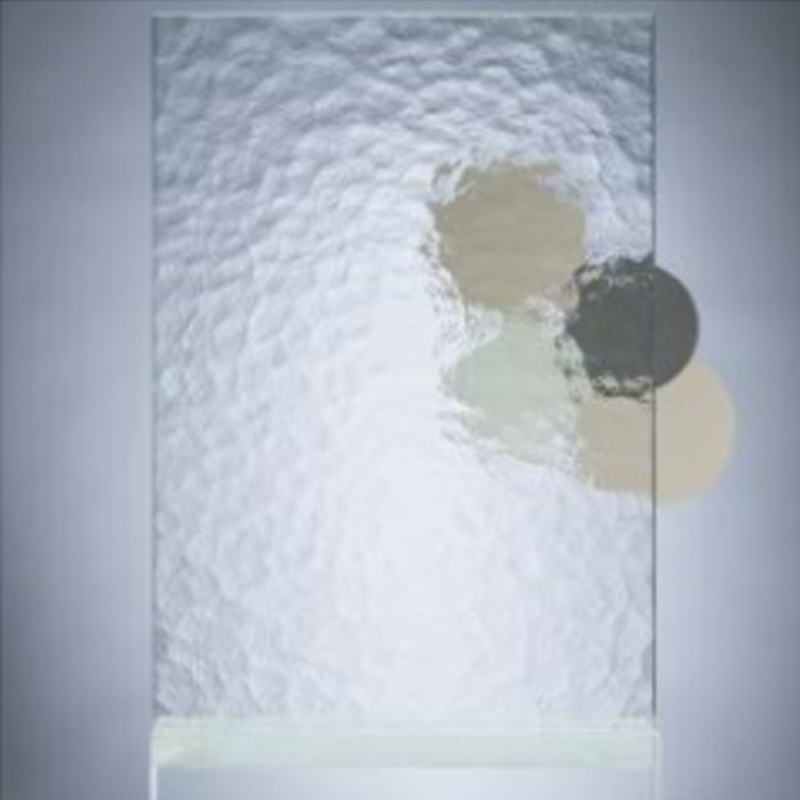 Water-textured embossed glass for cabinets and decorative panelsIts subtle flowing pattern creates natural light-and-shadow effects while preserving privacy with translucency. Well suited for cabinet doors or wall cladding, this glass balances visual interest with function, and pairs effectively with clear panels in shower settings.View Product →
For a shower enclosure, pair a textured panel on the fixed screen with clear tempered glass on the door. The contrast keeps the cubicle bright while the textured section handles privacy.
Textured Tempered Glass: FAQ
These are the specification questions that procurement teams and installers ask most often.
Can textured tempered glass be cut or drilled after tempering?
No. Any cutting, drilling, or grinding after tempering destroys the compressive layer and causes the panel to fail. All holes, notches, cut-outs, and edge profiles must be completed before the furnace cycle, so confirm final measurements with the processor before production begins.
Which texture gives the best balance of privacy and daylight?
Fluted and water-textured panels transmit roughly 72 to 85% of visible light while distorting direct sight lines, which makes them the strongest balance for shower and partition use. If you need near-complete privacy, choose pear or a sandblasted finish; these typically drop transmission below 60%.
Is textured tempered glass harder to clean than clear glass?
Deep relief patterns such as water-like textures can collect water marks more easily than smooth clear glass. Cloth and pear textures hide smudges better. For shower applications, specify a glass coating or select a shallow-relief pattern to simplify daily cleaning.
What certification should a textured tempered glass supplier hold?
For European projects, confirm that CE certification covers the specific thickness and product family. For China-bound orders, 3C certification is mandatory. A reliable manufacturer will also provide heat soak test reports and impact performance data on request.
Always request a physical sample of the exact texture and thickness before placing a large order. Light transmission, relief depth, and edge quality cannot be judged from a photograph.