

 中文简体
Choosing the right glass thickness is usually settled before a single panel is ordered, yet a wrong call on 6mm tempered glass shows up later as a bowed shower screen, a cracked shelf, or a failed inspection. In practical terms, 6mm tempered glass is a six-millimeter sheet of soda-lime float glass that has been heated to near its softening point and then rapidly air-quenched. The treatment leaves the surfaces in compression and the core in tension, giving the sheet roughly five times the bending strength of annealed glass at the same thickness. For glazing that must be safe, rigid, and affordable, this thickness is the default starting point for shower enclosures, furniture, and interior partitions.
15 kg/m2Weight of a 6mm tempered panel
3.4xStiffness vs a 4mm panel
5xBending strength vs annealed glass
+/-0.2 mmMean thickness tolerance
Specification baseline: 6mm tempered glass is the thinnest practical safety glass for frameless vertical glazing in wet areas. Below this thickness, deflection and shatter risk rise faster than the cost savings justify.
01. What 6mm Tempered Glass Is and How It Is Made
6mm tempered glass is a 6 mm thick soda-lime glass panel that has been thermally treated to create a durable balance between surface compression and internal tension.
The production cycle starts with cut-to-size float glass in clear, ultra-clear, or tinted material. The panel is edge-worked, washed, and passed into a furnace that raises it to roughly 620 to 650 C. Within seconds of leaving the heat zone, high-pressure air jets cool both faces evenly. The surfaces lock into compression, while the still-hot interior pulls into tension. That balanced stress is what allows the glass to absorb impact and, when it does break, to crumble into small granules rather than long shards.
- Cut the float glass to the finished panel size and grind the edges.
- Wash and dry the panel to keep the surface free of contamination.
- Heat the glass evenly to the tempering temperature range.
- Quench both faces with high-pressure air to create the stress layer.
- Inspect the panel for edge defects, roller marks, and distortion.
A modern tempering line completes this cycle in about 90 to 120 seconds, and the tempering step itself adds only a small cost to the base material. For a closer look at the stages and the quality checks involved, read how tempered glass is made.
Definition6mm tempered glass relies on surface compression of roughly 90 to 110 MPa. The compressed outer skin must stay intact for the panel to carry load, which is why edges are seamed properly and all holes are cut before tempering.
02. Strength and Break Performance of 6mm Tempered Glass
Under standardized bending tests, 6mm tempered glass resists about 120 to 180 MPa of surface stress, compared with 40 to 50 MPa for annealed float glass, so a 6mm panel takes roughly four to five times the load before fracture.
One point is often misunderstood: tempering raises the fracture threshold, not the stiffness. A 6mm panel deflects exactly like annealed glass of the same thickness under load; it simply does not crack until the applied stress becomes much higher. When you are sizing shelves or shower panels, both figures matter, because visible deflection makes glass look unsafe and can overload hinges and runners.
The fracture pattern is the actual safety feature. Under EN 12150, a broken 6mm tempered panel should produce at least 40 fragments in any 50 x 50 mm area, with none of the large pointed shards allowed. This granulated break is why building codes require tempered glass for shower screens, doors, and other human-impact glazing.
Flexural stiffness of tempered glass by thickness
Bar length follows the cube of the thickness; values are relative to a 4 mm panel.
4 mm1.0x
5 mm2.0x
6 mm3.4x
8 mm8.0x
10 mm15.6x
| Thickness | Weight | Stiffness | Typical applications | Shower use |
| 4 mm | 10 kg/m2 | 1.0x | Cabinet doors, mirrors, small displays | Not for doors |
| 5 mm | 12.5 kg/m2 | 2.0x | Framed panels, light shelves | Framed panels only |
| 6 mm | 15 kg/m2 | 3.4x | Frameless screens, shelves, partitions | Standard for frameless panels |
| 8 mm | 20 kg/m2 | 8.0x | Wide doors, table tops, balustrades | Large or heavy doors |
| 10 mm | 25 kg/m2 | 15.6x | Entrance doors, work surfaces | Special large formats |
Design rule: use 6mm for impact safety, but re-check span, wind load, and hardware weight before approving a large panel. Strength and stiffness are two different calculations.
03. Where 6mm Tempered Glass Fits Best
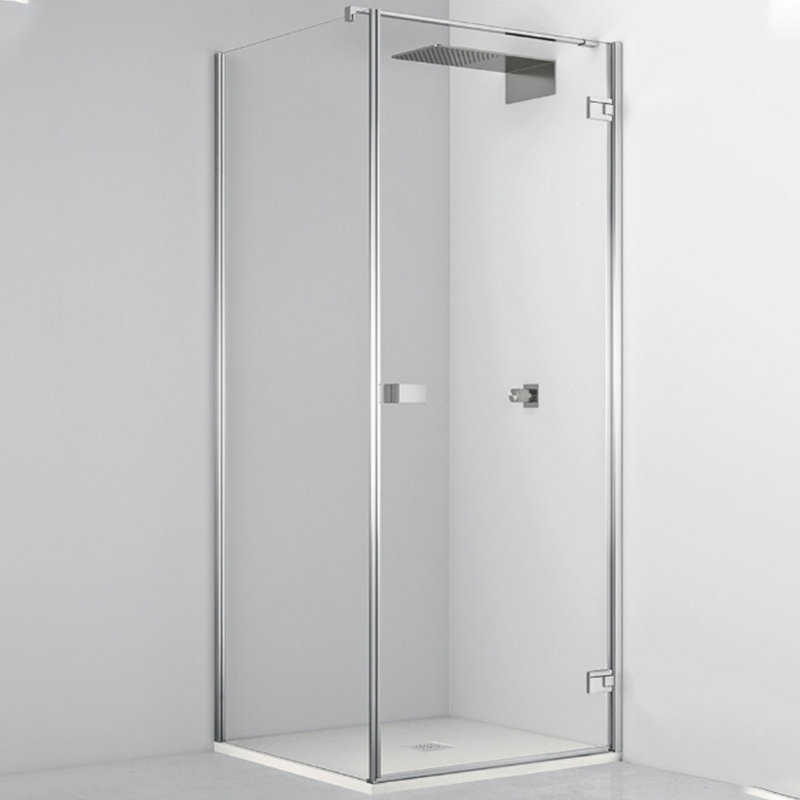
6mm tempered glass is the standard choice for frameless shower panels, glass shelves, and partition infills where the panel height stays under about 2200 mm and the width under 800 to 900 mm.
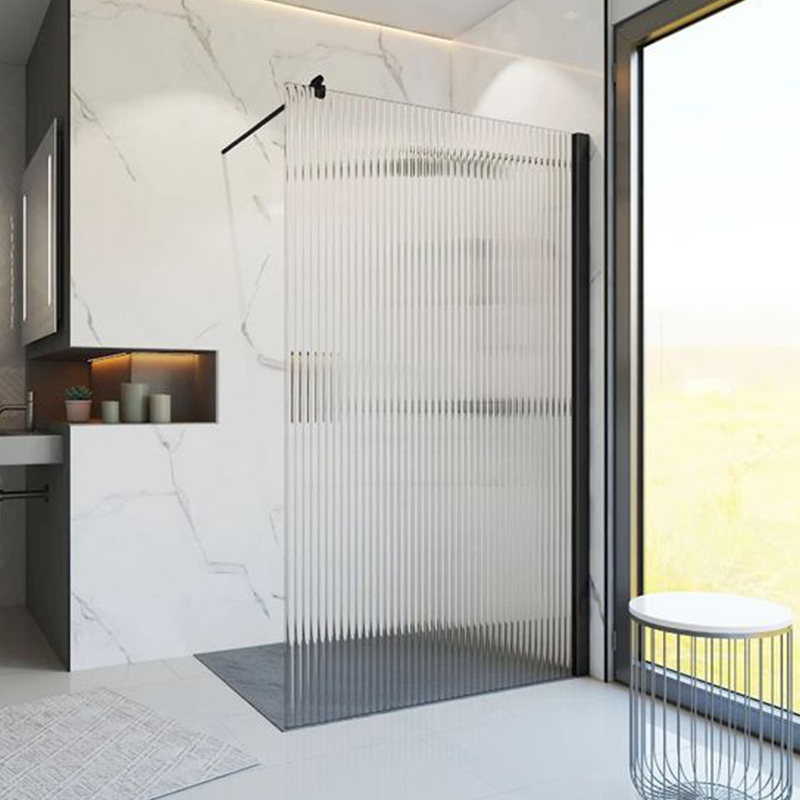
In a wet-room shower screen, a 6mm panel feels solid, weighs enough to hold steady on hinges, and stays within the deflection limits that most installers accept. Sliding shower doors built around a 6mm panel are a proven format in both home and hotel bathrooms. Table tops and shelving at this thickness support everyday loads well when the glass is supported along most of its edge.
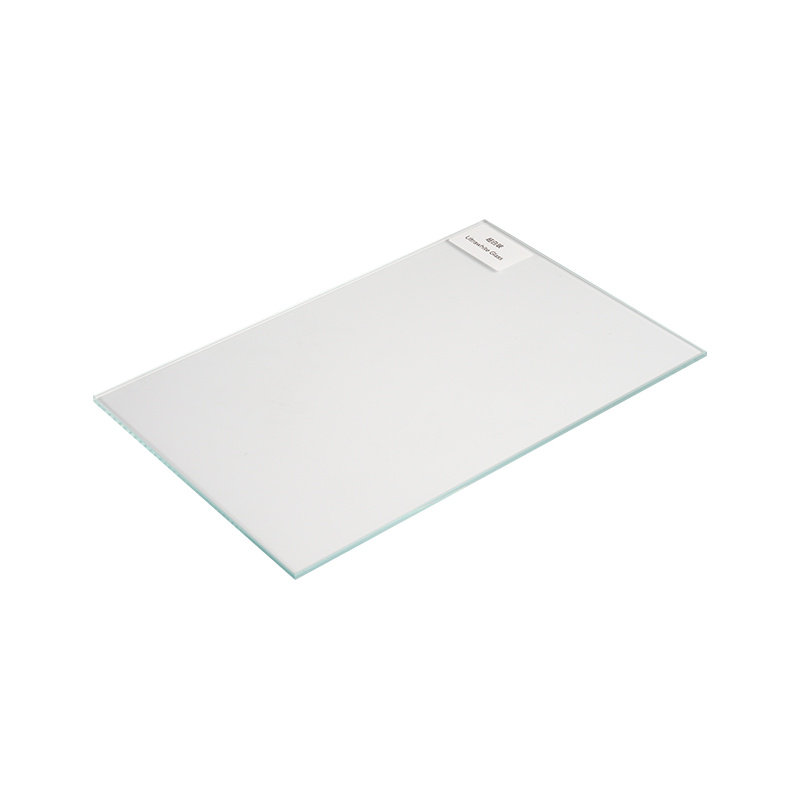 Tempered Clear Glass Panels for Shower EnclosuresThis clear tempered glass suits 6mm wet-room shower screens, offering solidity and reliable hinge support while meeting common deflection limits for frameless installations.View Product →
- Frameless fixed shower panels and wet-room screens
- Framed and semi-frameless sliding shower doors
- Furniture doors, desktop surfaces, and display shelves
- Balustrade infill and office partition glazing
- Appliance panels and cabinet fronts
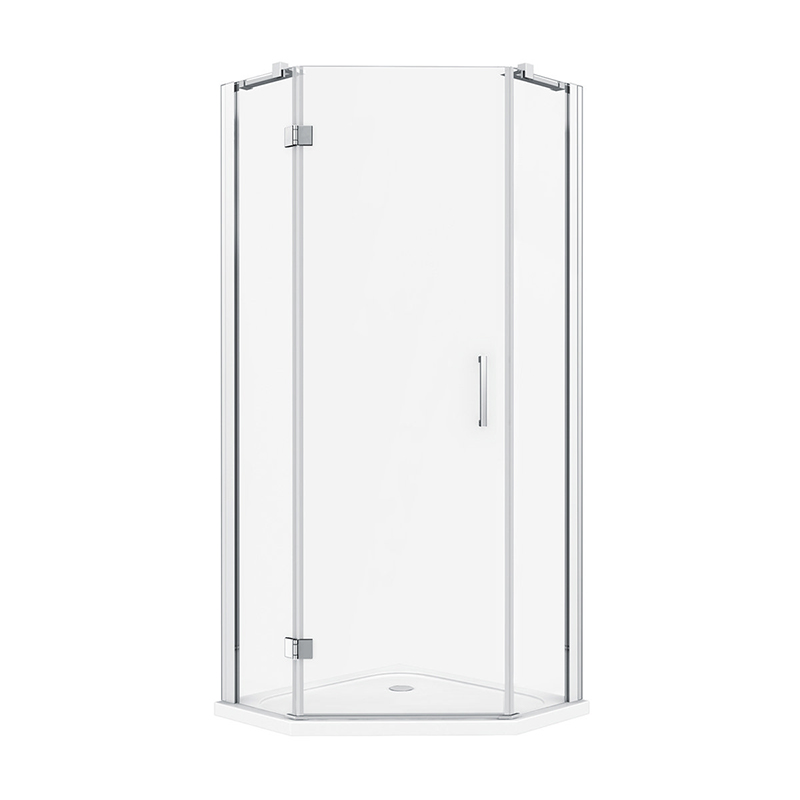
 Square 6mm Sliding Shower Enclosure with Inner DoorA square-shaped 6mm sliding shower enclosure provides a space-saving inner sliding option, combining sturdy glass with simple cleaning and effective water splash prevention.View Product →
Use 6mm whenthe panel height is up to 2200 mm, the width is up to 800 mm, the glass is edge-supported, hardware is standard light hinge or runner, and budget favors glazing under 8mm.
Move to 8mm whena frameless door is wider than 900 mm, hinge hardware is heavy, hotel bathrooms see high use, a table top has no center support, or the panel is exposed to wind load.
Markets with strict shower codes often treat 6mm as the minimum accepted thickness for frameless screens. When a design sits on the borderline, checking what thickness of glass is safest for a shower screen will show which side of the line the panel falls on.
04. Tolerances, Cutouts, and Panel Size Limits
A 6mm tempered panel is specified with a mean thickness tolerance of +/-0.2 mm, and all holes, notches, and edge profiles must be completed before the tempering cycle because the glass cannot be cut afterward.
Standard flat tempering furnaces handle panels up to roughly 2400 x 3600 mm, depending on the production line. Larger sizes require special lines, which raises both lead time and price. Cutouts follow simple geometric rules that protect the stressed edge zone.
- Minimum hole diameter is twice the glass thickness, which means 12 mm for a 6mm panel.
- Distance from the edge of a hole to the panel edge is at least the hole diameter.
- Corner notches must have rounded inner corners, never sharp square cutouts.
- Edge grinding before tempering is not optional; microcracks from cutting expand during quenching and cause low-load breakage.
Drawing ruleGive every hole a center coordinate measured from two finished edges, plus a diameter and the edge finish. A hole cut in the wrong place cannot be repositioned on tempered glass; the whole panel becomes scrap.
05. Cost and Sourcing Strategy for Tempered Glass
The landed cost of tempered glass is driven mostly by base glass quality, surface treatment, cut-to-size work, certification, and freight, while the tempering step itself adds only a small part of the final price per square meter.
Buyers in North America, Europe, and the Middle East commonly source 6mm panels from Chinese processors because the combination of material cost, process speed, and container logistics is competitive. A cut-to-size order from ports such as Ningbo or Shanghai typically ships in 3 to 5 weeks, ocean freight included. Custom sizes from a medium-sized plant take about 2 to 3 weeks to produce, while stock sizes leave sooner.
- Base float glass: clear, ultra-clear, tinted, or patterned
- Extra processing: edge polish, tempering, back-painting, screen printing
- Thickness tolerance and optical quality requirements
- Certification package: CE, 3C, and third-party SGS inspection reports
- Order volume, crate packaging, and container loading method
Suppliers that integrate tempering, edge work, and certification in one plant simplify this process. Zhejiang MingDing Glass Technology Co., Ltd. (MD Glass), a glass processor founded in 2006, operates a 20,000-square-meter plant in Zhejiang Province and produces about 50,000 tonnes of tempered glass a year. For a buyer who wants a single factory to handle the full glass range and certification documents, the sourcing conversation should start with a confirmed product range.
Impact Resistance Tempered Glass ManufacturersThe reason why tempered glass has better bending and impact resistance is due to the compressive stress formed on the glass surface during its manufacturing process. T...View Product →
Sourcing baseline: compare quotes on finished dimensions, tolerance, edge finish, and certification, not on glass thickness alone. The lowest per-square-meter price usually means more rejections on site.
06. A Practical Specification Checklist for Tempered Glass
To get an accurate quote, send finished dimensions, nominal thickness, edge finish, surface treatment, hole plan, quantity, and the safety standard that applies to your project.
- Confirm the nominal thickness as 6mm and state the acceptable thickness tolerance.
- List finished width and height after frame overlap or hinge allowance.
- Specify edge work: seamed, flat-ground, or fully polished.
- Mark every hole with a center coordinate measured from fixed edges.
- State the face: clear, tinted, patterned, or back-painted.
- Request certification documents and a break-test sample on large orders.
Example specification6mm clear tempered glass, 1800 x 600 mm, polished flat edges, two holes at 150 mm from the top edge, CE-certified, delivered in export crates.
07. Frequently Asked Questions about Tempered Glass
These are the most common buying questions when teams move to 6mm tempered glass.
Is 6mm tempered glass strong enough for a shower door?
Yes, for most fixed and sliding shower panels up to about 2200 mm high and 800 mm wide when the glass is properly supported. For frameless doors wider than 900 mm, heavy hinge sets, or hotel bathrooms with high use, 8mm is safer because the panel bends less and the hardware stays aligned.
How much does 6mm tempered glass weigh?
A 6mm tempered panel weighs about 15 kg per square meter, based on a glass density of 2500 kg per cubic meter. A typical 2000 x 800 mm shower screen therefore weighs about 24 kg before hinges or runners are added.
Can 6mm tempered glass be cut after tempering?
No. Cutting, drilling, or grinding a tempered panel will make it shatter into granules. All holes, notches, and edge profiles must be finished before the tempering cycle, so the drawing must be final before production starts.
How does 6mm tempered glass differ from 6mm laminated glass?
Tempered glass breaks into small granules and is used for human-impact glazing. Laminated glass bonds PVB, EVA, or SGP interlayers between panes, so the glass stays in one sheet after cracking. Overhead glazing, floors, and security glazing usually require laminated units, often in a tempered-laminated combination.
In short: when a specification calls for safety glass that resists impact and deflection at a reasonable cost, 6mm tempered glass is the right answer for most vertical glazing up to 2200 mm high.