

 中文简体
A Manchester hotel replaced 46 square metres of lobby curtain in 2023. Eighteen months later the fabric along the window line had faded to pale grey while the glass itself looked untouched. Heat was not the cause. The 340 to 400 nanometre band passes through ordinary float glass almost unopposed, and that is the band that bleaches dye, yellows lacquer and embrittles polymer.
Anti UV glass film is the fastest way to close that gap on glazing that is already installed. It is also the wrong answer for a shower enclosure, a steam room or a sealed cavity. The specification only works when the film chemistry, the adhesive and the service environment are matched to each other.
What an Anti UV Glass Film Actually Blocks
An anti UV glass film is a polymer or ceramic-coated sheet between 25 and 100 micrometres thick that is bonded to an existing pane to reject ultraviolet radiation, typically 99 percent of the 300 to 380 nanometre range, while transmitting most of the visible spectrum.
Working definition
A UV rejection figure is meaningless without its cutoff wavelength. A film rated at 99 percent below 380 nm still passes UVA between 380 and 400 nm; a film rated below 400 nm closes that window as well.
Ultraviolet light is only about 3 percent of the solar energy that reaches a window, yet it drives roughly 40 percent of fading damage. Visible light and heat each contribute around 25 percent, and the remainder comes from moisture, pollutants and the material's own chemistry. That split defines the honest limit of film: it slows fading dramatically, but it does not stop colour shift caused by visible light or by heat.
Two standards govern the measurement. EN 410 and ISO 9050 are used for European and most export orders, while NFRC 300 applies in North America. Ask for the test method before comparing two films, because a 380 nm cutoff and a 400 nm cutoff can both be printed as 99 percent on the same page.
UV Transmission by Glass Type: Where Film Changes the Numbers
Untreated 6 mm clear float glass transmits roughly 60 to 70 percent of the 300 to 400 nanometre band. Adding a UV film, a UV-filtering interlayer or a factory coating pulls that figure below 1 percent, and that gap is the entire reason the retrofit market exists.
Share of the 300 to 400 nm band transmitted through 6 mm glazing
Uncoated clear float
65%
Body-tinted grey or bronze
30%
Laminated, standard PVB
3%
Laminated, UV-filter PVB
Under 1%
UV film or factory coating
Under 1%
Typical 6 mm datasheet values measured to EN 410. Bars share one scale; project data should come from the supplier's own test report.
The chart also shows why tinted glass is often mis-sold as UV protection. A grey or bronze body tint absorbs part of the UVA band simply because it absorbs light, but it is specified for glare and solar heat gain, not for ultraviolet control. Measured values swing widely with tint density and thickness, and a dark tint that halves visible light may still pass 30 percent of the UV band.
Laminated glass behaves differently because the interlayer does the work. Standard polyvinyl butyral absorbs nearly all radiation below 380 nm as a natural property of the material, and grades formulated for museum and retail display glazing push the cutoff to 400 nm. Buyers comparing tinted options first should read this analysis of how effective tinted glass is at blocking UV rays before writing the specification.
Anti UV Glass Film vs Laminated and Tinted Glass: Matching the Solution to the Application
Retrofit film wins when the glazing is already installed, the budget is fixed and the service environment is dry and accessible. Laminated glass wins whenever the surface will be cleaned aggressively, exposed to steam, or required to hold its performance for more than a decade.
Retrofit anti UV film
- Applied after installation, no glazing replacement
- Lowest material cost per square metre
- Suited to dry, reachable interior surfaces
- Service life set by the adhesive
UV-filter laminated glass
- UV cutoff fixed at the factory
- Survives steam, cleaning agents and abrasion
- Adds safety and sound reduction at the same time
- Must be ordered before fabrication
UV control is not only a film decision. The table compares the five routes that are actually specified on commercial projects, with the numbers that matter at the point of purchase.
| Option | Typical UV block | Visible light | Expected service life | Retrofit possible |
| Dyed polyester film, 1.5 mil | 95 to 99 percent below 380 nm | 35 to 70 percent VLT | 5 to 10 years | Yes |
| Ceramic or sputtered film | 99 percent below 400 nm | 50 to 70 percent VLT | 10 to 15 years | Yes |
| Laminated glass, standard PVB | About 99 percent below 380 nm | 85 to 89 percent VLT | 25 years and more | No |
| Laminated glass, UV-filter PVB | Over 99 percent below 400 nm | 85 to 90 percent VLT | 25 years and more | No |
| Body-tinted glass, grey or blue | 25 to 70 percent of the UV band | 30 to 60 percent VLT | 25 years and more | No |
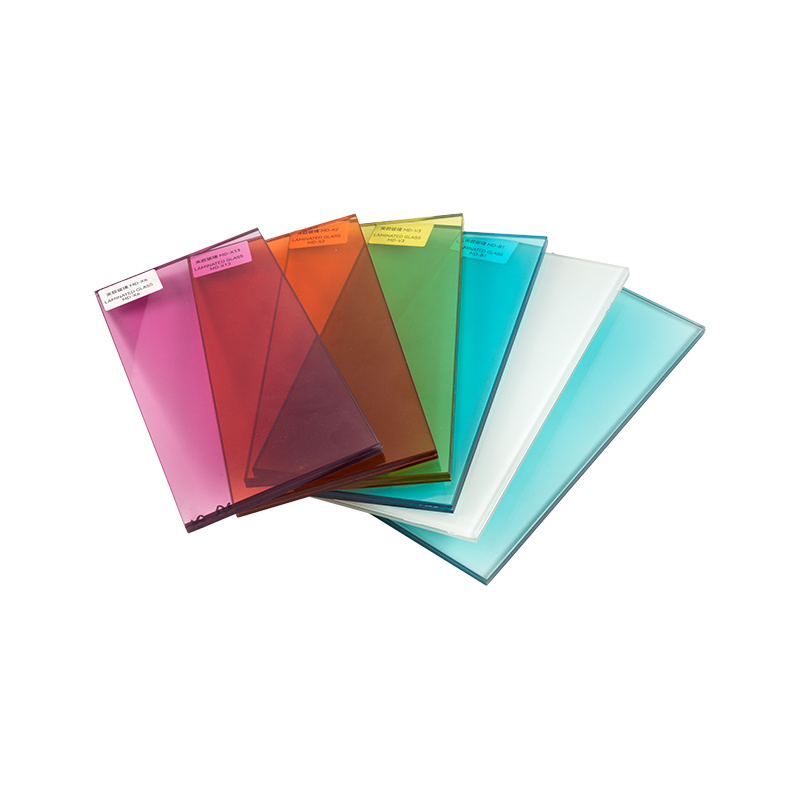 Radiation-Proof Colored Laminated Glass with EVA or PVB InterlayersFor projects weighing factory-bonded UV control, this laminated glass combines colored EVA or PVB interlayers with safety, acoustic and thermal insulation in custom specifications.View Product →
Notice the trade-off buried in the middle columns. The solutions that hold UV performance longest are the ones that cannot be applied after the glass leaves the factory, and the cheapest retrofit options are exactly the ones that fail first in a wet room.
Where Film Fails: Humid Bathrooms, Saunas, and Curved Glazing
Adhesive film should not be specified for the inside face of a shower enclosure, a steam room or any pane that stays above roughly 70 percent relative humidity. Edge lift, silvering and adhesive clouding typically appear within 12 to 30 months in those conditions, which is well inside most film warranties.
Three service environments defeat anti UV glass film no matter how good the product is:
- Wet rooms and steam rooms, where constant condensation attacks the adhesive edge and lifts it from the glass.
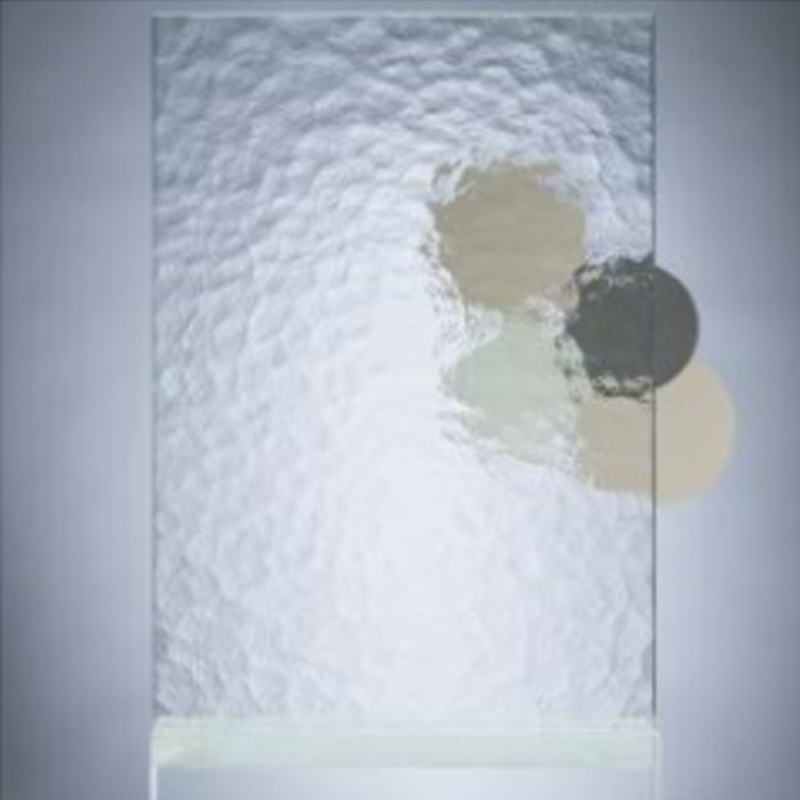
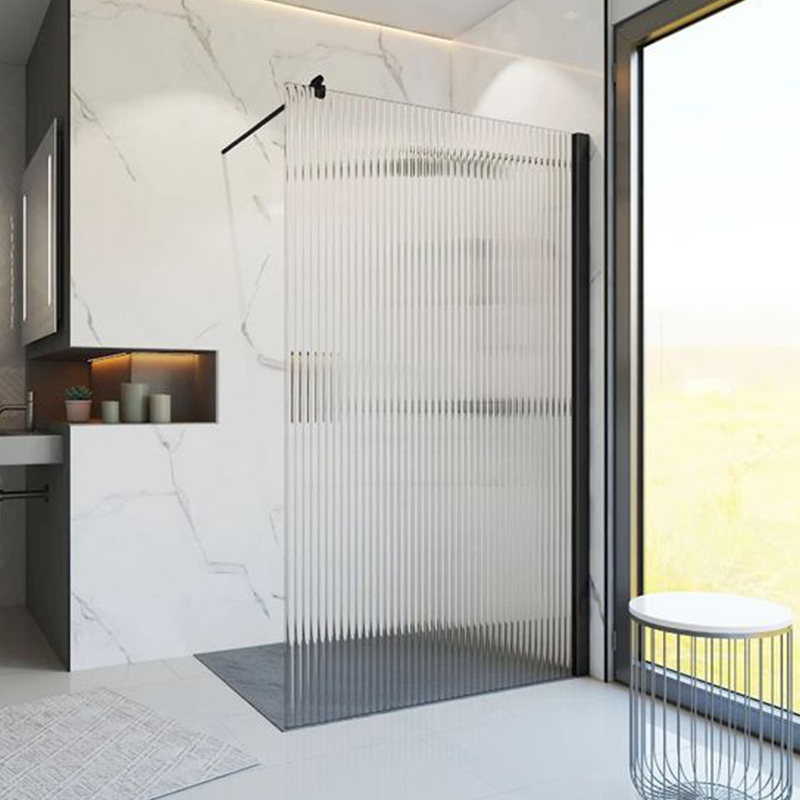
- Deep-textured patterned glass, where film cannot follow reeded, water or pear textures without trapping air pockets.
- Curved or bent glazing, which needs a shrinkable film installed on site by a trained applicator rather than a standard roll.
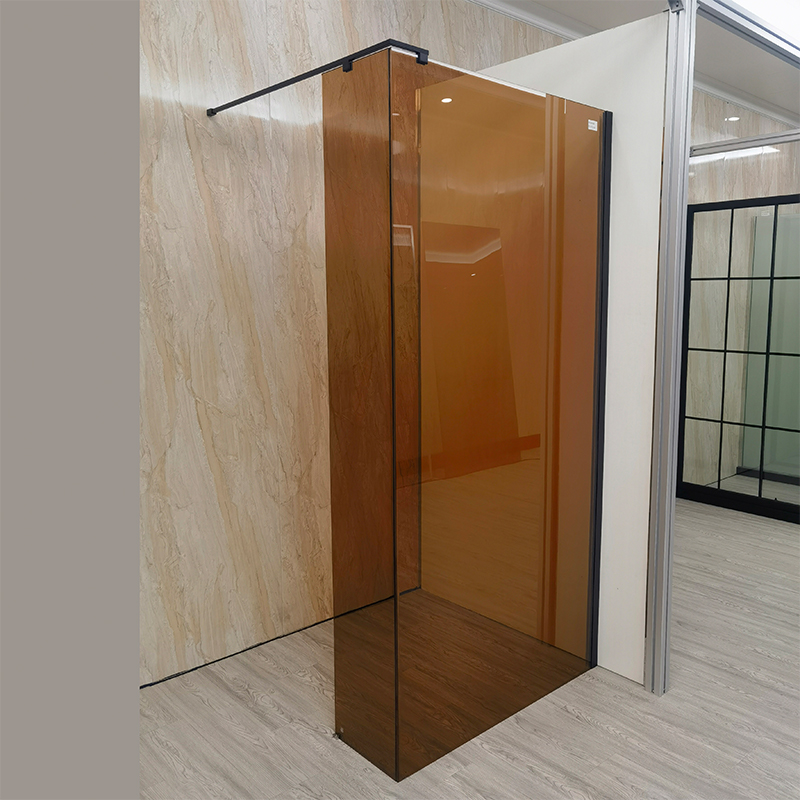
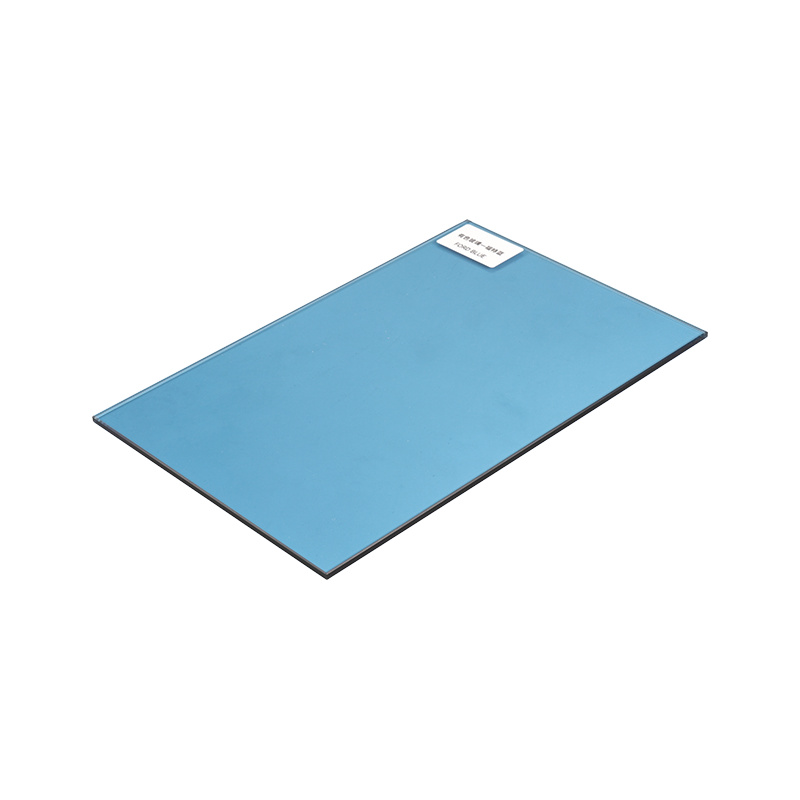 Sea Blue or Light Blue UV-Resistant Shower Room GlassA body-tinted tempered option for shower rooms and decorative glazing, offering blue color, thermal insulation and UV resistance without relying on surface film.View Product →
The durable alternative for a bathroom is UV control built into the pane. A body-tinted sea blue or light blue tempered glass absorbs UV while delivering the privacy and colour most wet rooms need, and a laminated build with UV-filter PVB reaches the same cutoff inside the interlayer, where no amount of steam or descaler can reach it.
Specifying an Anti UV Glass Film Order: Numbers to Confirm Before Shipment
Four figures decide whether an anti UV glass film order is fit for purpose: UV rejection together with its cutoff wavelength, visible light transmission, adhesive class, and the warranty position on edge lift and bubbling.
99%
UV rejection target below 400 nm
70%
Relative humidity above which adhesives fail early
1.52 m
Standard roll width, cut to length on site
10 to 15
Years of expected life on dry interior glass
- Fix the cutoff wavelength in writing. Below 380 nm suits furniture protection; below 400 nm is required for artwork, textiles and retail display.
- Match visible light transmission to the room. Below 50 percent VLT improves glare control but darkens the space and increases lighting load.
- Select the adhesive by surface energy and cleaning regime. Pressure-sensitive acrylic suits most flat glass; a harder coat is needed where solvents are used weekly.
- Confirm the film format and application side. Interior faces only, never inside a sealed cavity, and always on the accessible surface.
- Agree the failure remedy before the deposit. A warranty that covers only material, not removal and reapplication, leaves the buyer carrying the labour cost.
Freight is the argument most buyers overlook. A 1.52 m by 30 m roll of anti UV glass film weighs roughly 12 to 16 kilograms and ships as a parcel. The same coverage in laminated glass weighs several tonnes, needs crating and palletising, and changes the landed cost far more than the film price difference suggests.
How UV Control Is Built Into Glass at the Factory
Zhejiang MingDing Glass Technology Co., Ltd., trading as MD Glass, builds UV control into the glass itself rather than applying it after installation, which removes the adhesive from the long-term performance equation.
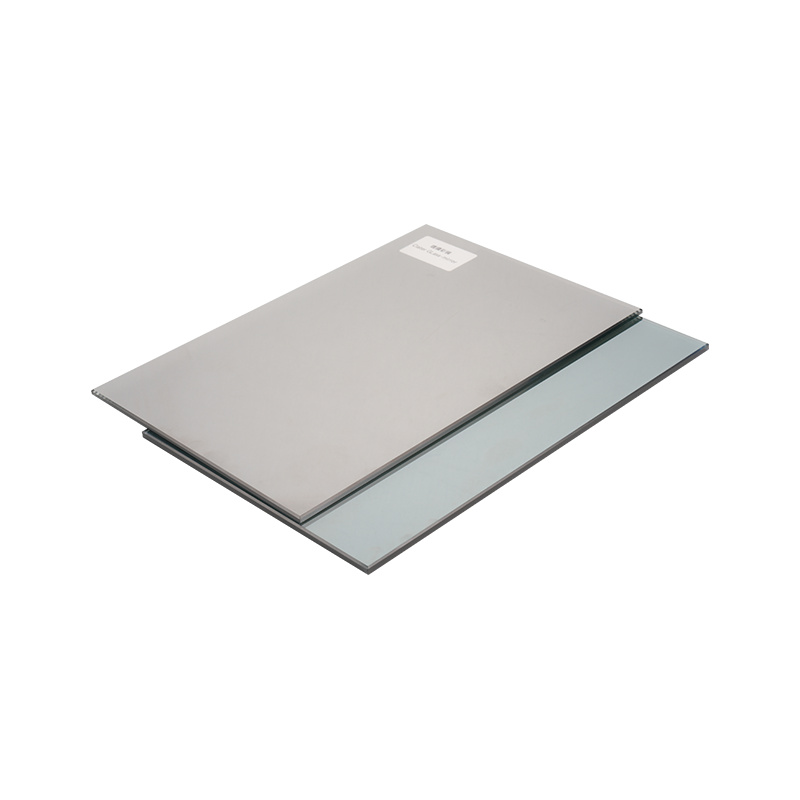
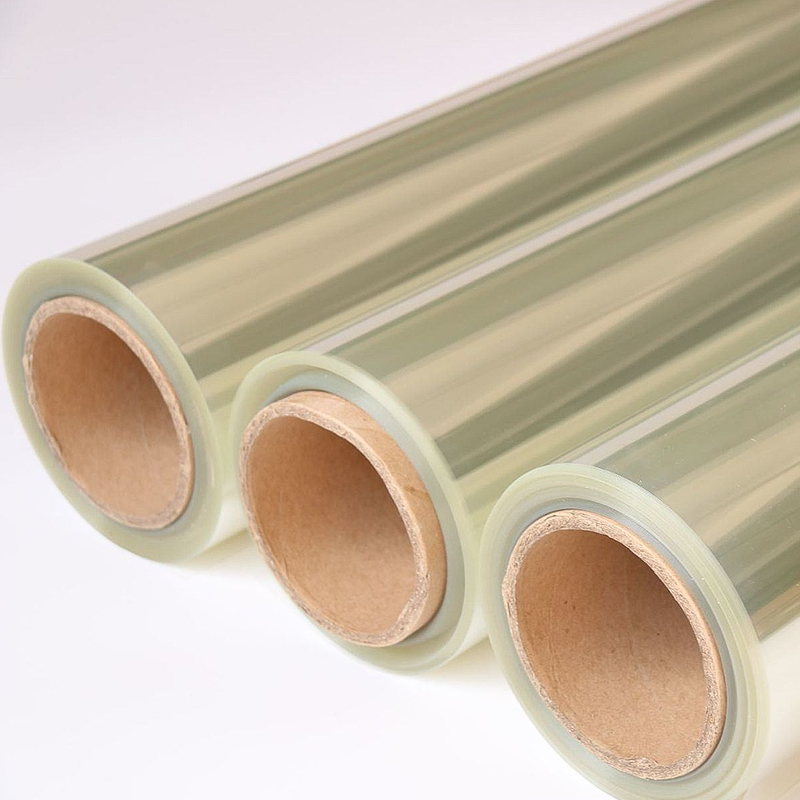 Explosion-Proof Heat-Insulating Anti-UV Glass FilmA glass surface film offering heat insulation, UV resistance, anti-glare performance and decoration plus fragment retention; compare with factory-built UV options.View Product →
The company has processed glass since 2006 at a 20,000 square metre plant in the Shangyu Economic and Technological Development Area in Zhejiang, with an annual tempered glass output of about 50,000 tonnes. Its range covers the routes that replace film in demanding environments: body-tinted glass in bronze, grey and sea blue, wire-laminated glass with radiation-resistant PVB and EVA interlayers, and factory-applied coatings including heat-insulating anti-UV film, reflective translucent coating and easy-clean back-painted glass. Products carry China 3C and European CE certification, and the firm supplies more than 100 customers across the United Kingdom, the United States, Russia, Lebanon, Uzbekistan and Turkey.
For a buyer, the practical difference is simple. Film rescues a facade that cannot be replaced. Factory-applied UV glass solves the same problem without an adhesive that has to survive twenty years of cleaning chemicals, steam and thermal cycling.
MD Glass also assembles complete shower enclosures and shower screens from the same UV-controlled glass, which keeps the UV specification, the edge finish and the hardware tolerances under one supplier and one inspection report.
Frequently Asked Questions
Most UV specification disputes come down to four questions: what the film blocks, where it can live, how long it lasts, and what it cannot do.
Does anti UV glass film stop furniture and flooring from fading?
It slows fading substantially but does not stop it. UV drives around 40 percent of fading damage; visible light and heat cause most of the remainder. A film blocking 99 percent below 400 nm removes the fastest degradation pathway, yet a sunlit room with high visible light transmission will still shift colour over several years.
Can anti UV glass film be installed inside a sealed double-glazed unit?
No. Film belongs on an accessible room-side surface. Inside a sealed cavity the adhesive cannot be serviced, the unit warranty is voided, and any outgassing is trapped permanently. Specify a laminated or coated pane instead when the cavity is the only available surface.
How long does anti UV glass film last?
Interior film on flat glass in a dry, air-conditioned room commonly performs for 10 to 15 years. Expect 5 to 10 years in a kitchen or corridor with frequent cleaning, and expect failure inside three years on the wet face of a shower. The adhesive, not the UV chemistry, sets the limit.
Does the film reduce heat as well as UV?
Only marginally, because UV is roughly 3 percent of solar energy. Cutting heat requires infrared rejection and a meaningful total solar energy rejection figure, usually 45 to 65 percent for a mid-range ceramic film. Ask for TSER rather than the UV number whenever comfort is the actual goal.